If you are trying to put an unregistered vehicle back on the road in New South Wales, a blue slip NSW inspection is often one of the first requirements you need to deal with. Officially called an Authorised Unregistered Vehicle Inspection Scheme (AUVIS) inspection, the blue slip checks whether an unregistered vehicle meets required safety, design and identity standards before it can be registered.
The process is particularly relevant when registration has been expired for more than three months, when a vehicle has been brought into NSW from interstate or overseas, or when the vehicle has no number plates. It can also apply to certain written-off vehicles, significant vehicle changes and defect-clearance situations.
Fore More Information:
Visit Homepage
What Does a Blue Slip NSW Inspection Actually Mean?
A blue slip NSW report is an AUVIS report issued after an authorised inspection of an unregistered vehicle. Its purpose is broader than a routine registration-renewal safety inspection because it verifies not only roadworthiness but also important vehicle identity and design requirements.
The inspection is carried out by a provider accredited under the Transport for NSW Authorised Inspection Scheme. Authorised inspection stations display an AIS sign at their premises showing the types of inspections they are authorised to perform.
The term “blue slip” is commonly used by vehicle owners, while AUVIS is the official scheme name. When you search for a blue slip NSW inspection, therefore, you are looking for an AUVIS inspection rather than a standard pink slip.
Blue Slip vs Pink Slip
The two inspections serve different purposes.
| Inspection | Main purpose | Typical situation |
|---|---|---|
| Blue slip NSW / AUVIS | Safety, identity and design checks for an unregistered vehicle | Re-registration of an unregistered vehicle |
| Pink slip | Routine safety inspection for registration renewal | Certain registered light vehicles requiring a yearly safety check |
A pink slip is generally associated with registration renewal, whereas a blue slip is associated with establishing or restoring registration for an unregistered vehicle. Most light vehicles over five years old may require a safety inspection for renewal, while an AUVIS inspection is used in the specific unregistered-vehicle situations outlined by NSW authorities.
When Do You Need a Blue Slip NSW?
Not every vehicle owner needs a blue slip. The requirement depends on the vehicle’s registration status, history and circumstances.
You generally need an AUVIS inspection when one of the following applies:
- The vehicle’s registration expired more than three months ago.
- The vehicle has been brought into NSW from another Australian state or territory.
- The vehicle has been imported from overseas.
- The vehicle has no number plates.
- The vehicle was written off and has subsequently been approved for re-registration.
- A significant change has been made to the vehicle, such as installing a new engine, requiring registration records to be adjusted.
- Certain defect notices need to be cleared.
Registration Expired for More Than Three Months
This is one of the most common reasons people search for a cost for blue slip nsw inspection.
If your NSW registration has been expired for more than three months, you generally cannot simply renew it as normal. The vehicle needs to be re-registered, and an AUVIS report is one of the required documents. Service NSW also states that number plates need to be replaced when registration has expired for more than three months.
If the registration is still within the three-month period, the situation can be different because the vehicle may still be eligible for renewal rather than full re-registration.
Fore More Information:
Visit Homepage
Interstate or Overseas Vehicles
A vehicle brought into NSW from another state, territory or another country may need a cost for blue slip nsw inspection before NSW registration can be established.
For an interstate vehicle, the registration process can also require proof of registration entitlement, the original AUVIS report and compulsory third-party insurance. NSW registration requirements can vary depending on the vehicle and its circumstances.
If you are transferring an interstate vehicle, check the current Service NSW requirements before arranging the inspection:
Vehicles With No Number Plates
A vehicle without number plates may also require an AUVIS inspection before it can be registered. If the previous registration expired more than three months ago, Service NSW notes that replacement number plates will be required at a Service NSW Centre.
Written-Off Vehicles
Written-off vehicles can involve additional inspections and documentation. A blue slip alone does not necessarily complete the process.
For an eligible NSW written-off light vehicle, the vehicle must first have the required authorisation and repairs completed. It then needs an AUVIS inspection and a Vehicle Identity & Inspections Unit (VIIU) inspection before re-registration.
That means owners of written-off vehicles should check the specific NSW process before booking a standard blue slip inspection.
What Does the Blue Slip NSW Inspection Check?
The purpose of the AUVIS inspection is to confirm that the vehicle is safe and satisfies relevant design and identity standards.
The exact inspection requirements can depend on the type of vehicle and its circumstances, but owners should expect the examiner to consider both the physical condition of the vehicle and whether its identity details can be properly verified.
Safety and Mechanical Areas
Before attending a blue slip NSW inspection, it makes sense to check the vehicle carefully. Items that can affect safety include:
- Braking components
- Tyres and wheels
- Steering
- Suspension
- Lights
- Windscreen and glass
- Wipers
- Seatbelts
- Structural components
- Exhaust and related equipment
- Other safety-related vehicle components
The inspection is not simply a visual formality. The vehicle needs to satisfy the applicable safety requirements, so obvious mechanical or safety problems should be addressed before the appointment.
Vehicle Identity Checks
Identity is another major part of an AUVIS inspection.
The examiner needs to be able to establish that the vehicle being inspected corresponds with its records. This makes details such as the VIN, engine information, compliance information and other identifying details important.
If identification markings are difficult to see because of dirt, corrosion or other obstructions, it is sensible to clean the relevant areas before taking the vehicle for inspection. This can make the examination easier and help prevent avoidable delays.
Modified Vehicles Need Extra Attention
A significant modification can change what documentation or certification you need.
For example, a new engine may require an adjustment to the vehicle’s registration records and can trigger an inspection requirement. NSW also states that significantly modified or non-standard vehicles may need inspection by a licensed certifier under the Vehicle Safety Compliance Certification Scheme (VSCCS).
If your vehicle has substantial modifications, don’t assume that a standard blue slip alone will resolve every registration requirement. Check the modification and certification requirements before the inspection.
What Should You Prepare Before Booking?
Preparation can make the cost for blue slip nsw process much smoother. Start by confirming why your vehicle needs the inspection and what registration pathway applies to it.
A useful pre-inspection checklist includes:
- Confirm the vehicle’s current registration status.
- Identify whether the vehicle came from interstate or overseas.
- Check whether the vehicle has its number plates.
- Review any defect notices that need to be cleared.
- Check whether the vehicle has significant modifications.
- Locate the vehicle’s VIN and other identification details.
- Gather ownership or registration-entitlement documents.
- Prepare your proof of identity.
- Make sure the vehicle is accessible for inspection.
For a vehicle being re-registered after more than three months without registration, you should also plan for the other registration requirements, including CTP insurance and the relevant registration documents.
Documents and Information to Have Ready
The exact documents can vary according to the reason for registration, but registration applications commonly require proof of identity, proof of registration entitlement, the relevant inspection report and CTP insurance.
For example, Service NSW lists an AUVIS report, proof of identity, proof of registration entitlement, CTP insurance and payment among the requirements for registering an expired NSW second-hand vehicle.
If you are transferring an interstate vehicle, additional documents may apply, including original number plates and, where relevant, a Vehicle Safety Compliance Certification Scheme certificate for a modified vehicle.
Fore More Information:
Visit Homepage
How Much Does a Blue Slip NSW Inspection Cost?
The official NSW Government fee schedule lists the maximum fees for the common blue slip safety and identity checks. From 1 July 2026, the listed fees including GST are:
| Vehicle type | Blue slip NSW fee |
|---|---|
| Light vehicle | $82 |
| Motorcycle | $51 |
| Trailer without brakes | $42 |
| Trailer with brakes | $60 |
These are the official maximum fees shown by the NSW Government for the listed inspection types. They relate to the inspection itself and should not be confused with repair costs, registration charges, insurance or other vehicle-related expenses.
Remember: The Inspection Fee Is Not the Whole Registration Cost
Paying for a cost for blue slip nsw inspection does not mean the vehicle is fully registered.
Depending on your circumstances, you may still need to pay for:
- Registration
- Number plates
- CTP insurance
- Repairs
- Certification or additional inspections where applicable
- Other applicable registration-related charges
For this reason, it is useful to calculate the full cost of getting the vehicle legally registered rather than budgeting only for the inspection.
What Happens If the Vehicle Is Not Ready?
A blue slip inspection is designed to establish whether the vehicle meets the relevant requirements. If issues are identified, those problems may need to be corrected before the vehicle can proceed through registration.
This is why a pre-inspection check is worthwhile. Look for obvious problems such as damaged lights, poor tyres, windscreen issues, worn components or identification details that are difficult to verify.
For modified, written-off or unusual vehicles, additional requirements may apply. Checking those requirements in advance can prevent a situation where you arrive expecting a straightforward AUVIS inspection but discover that another certification or inspection is necessary.
How to Get a Blue Slip NSW Inspection
Once you know that your vehicle requires an AUVIS inspection, the next step is to locate an authorised inspection provider. Service NSW provides the official information and inspection pathway here:
Step 1: Get the Vehicle Ready
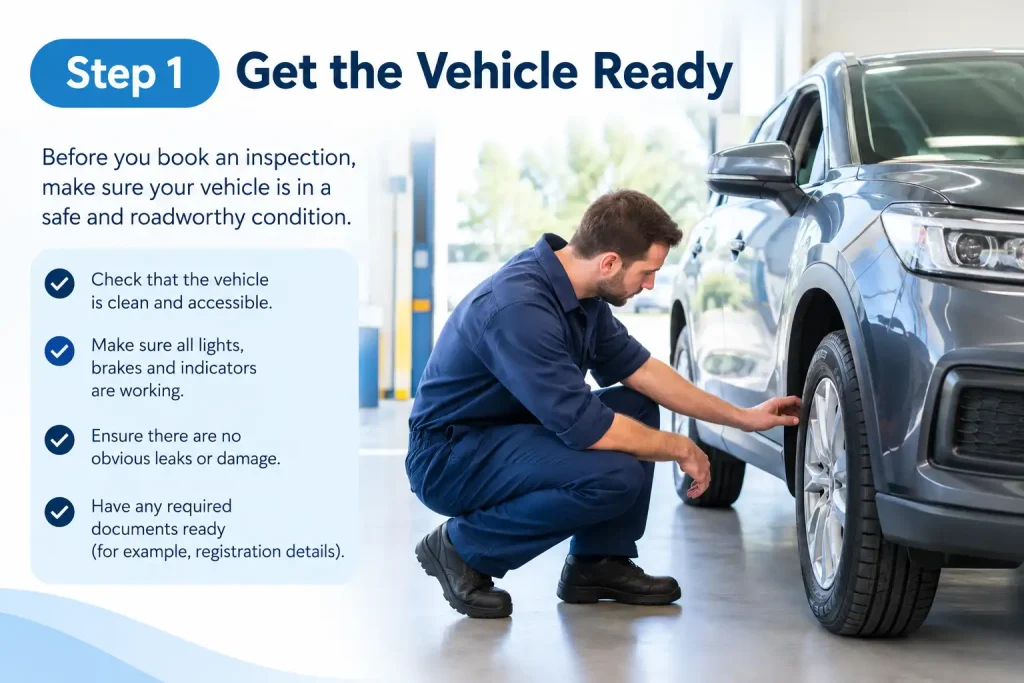
Before booking your cost for blue slip nsw inspection, give the vehicle a proper check. The examiner needs to inspect the vehicle safely and verify its identity, so the vehicle should be reasonably clean and accessible.
Pay particular attention to:
- Tyres and wheels
- Brakes
- Lights and indicators
- Windscreen and other glass
- Wipers
- Seatbelts
- Steering and suspension
- Exhaust components
- VIN and other identifying numbers
- Any areas affected by modifications
Cleaning around the VIN and engine identification area is especially useful if dirt, grease or corrosion makes the markings difficult to read.
Tip: Don’t wait until inspection day to discover an obvious problem. Checking basic items beforehand can save you a second trip and additional repair costs.
Step 2: Find an Authorised Inspection Station
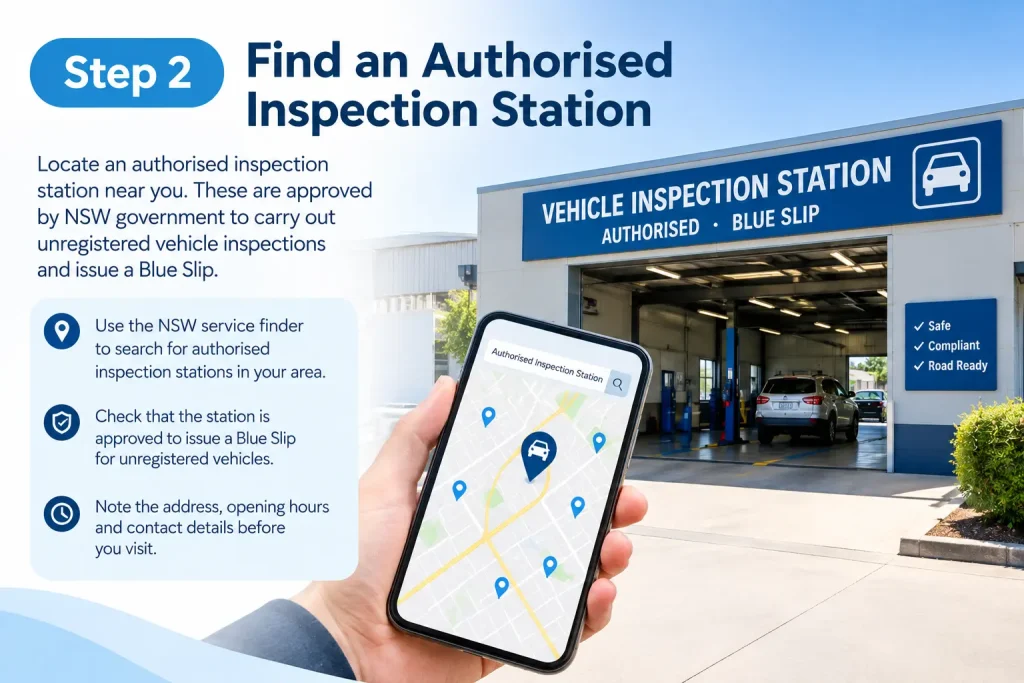
A cost for blue slip nsw inspection must be performed through an authorised provider under the NSW Authorised Inspection Scheme.
Use the official Service NSW information to find an appropriate inspection station and confirm that the provider performs the inspection your vehicle requires.
When contacting a station, tell them why the vehicle needs an inspection. For example, explain whether:
- Registration has been expired for more than three months.
- The vehicle has come from interstate.
- It has been imported.
- It has no number plates.
- It has been significantly modified.
- It is a previously written-off vehicle.
- You need a defect cleared.
This gives the inspection provider enough context to tell you whether any additional requirements may apply.
Offical Website: Blue Slip NSW
Step 3: Arrange Legal Transport
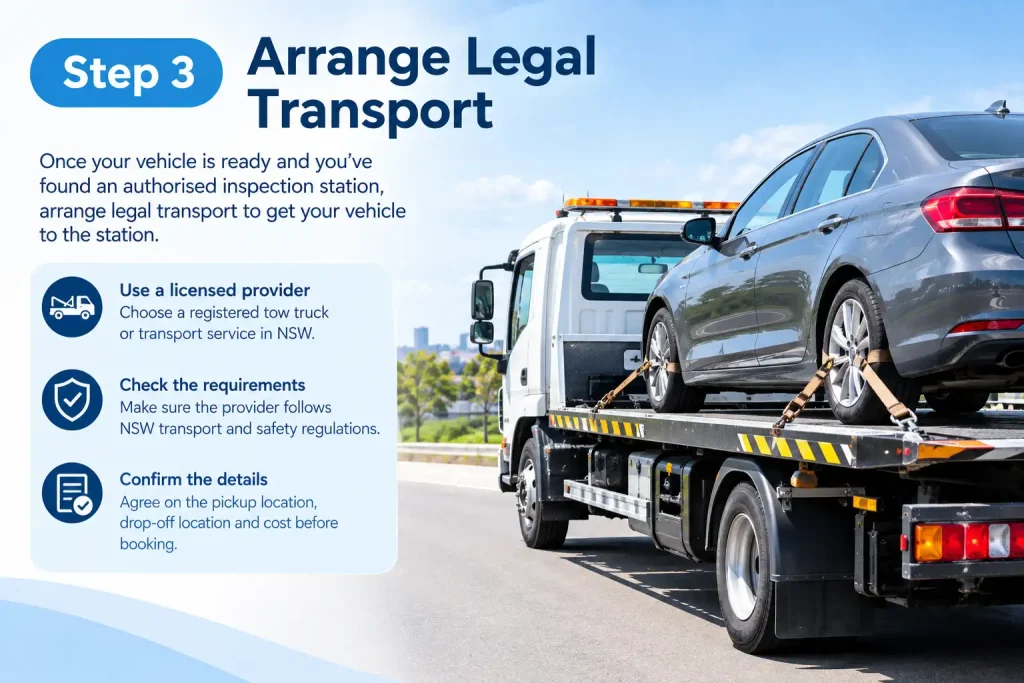
An important point is often overlooked: an unregistered vehicle cannot simply be driven around NSW as though it were registered.
If the vehicle is unregistered, you need to make sure its journey to the inspection is legally permitted. Depending on your circumstances, this can mean arranging appropriate transport such as a tow truck or obtaining an Unregistered Vehicle Permit (UVP) where eligible.
The NSW Government provides information about permits for driving an unregistered vehicle for specific purposes.
Important: Check the permit conditions before travelling. A permit does not turn an unregistered vehicle into a normally registered vehicle; it provides limited permission for specified travel.
Step 4: Take the Vehicle to the Inspection
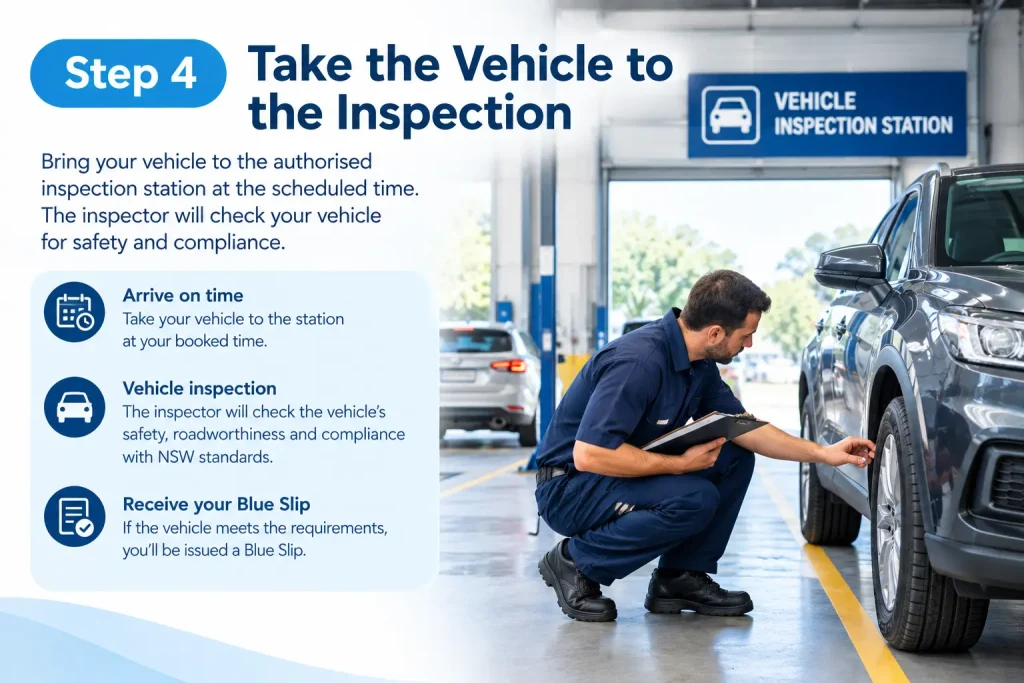
On the appointment day, take the vehicle to the authorised inspection station along with the information and documents relevant to your registration circumstances.
The examiner will assess the vehicle against the applicable safety and identity requirements.
The inspection can involve checking the vehicle’s:
- Safety-related mechanical components
- Wheels and tyres
- Lighting equipment
- Steering and suspension
- Glass and visibility
- Seatbelts
- Structural condition
- Identification numbers
- Compliance information
- Other applicable requirements
The exact inspection can vary according to the vehicle and the reason an AUVIS inspection is required.
Step 5: Wait for the Inspection Result
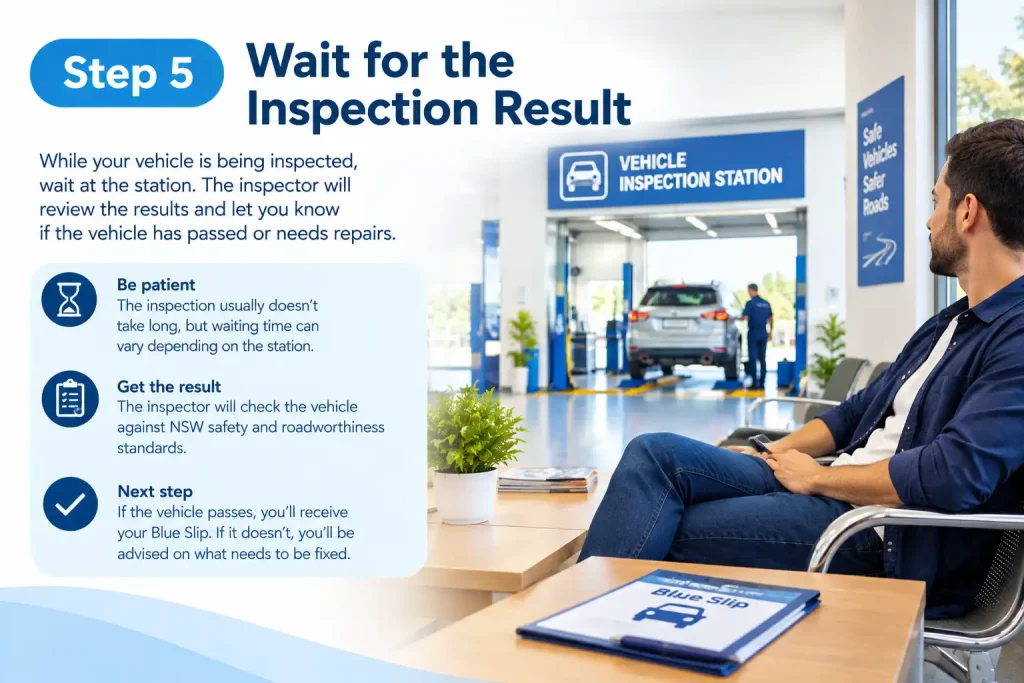
If the vehicle satisfies the applicable requirements, the AUVIS report can be used as part of the registration process.
The inspection result is transmitted electronically to Transport for NSW rather than requiring you to carry a traditional paper report in every situation.
If defects or compliance issues are identified, deal with them before proceeding with registration.
What Happens After a Blue Slip NSW Inspection?
Passing the cost for blue slip nsw inspection is an important step, but it isn’t the same thing as registering the vehicle.
You still need to complete the relevant registration process.
For a vehicle whose NSW registration has been expired for more than three months, Service NSW lists several requirements, including:
- A valid AUVIS report.
- Proof of identity.
- Proof of registration entitlement.
- CTP insurance.
- Payment of the applicable registration and other charges.
- Number plates where required.
Get Your Green Slip
A Green Slip is compulsory third-party insurance, also called CTP insurance. You need CTP cover before completing registration.
The Green Slip and blue slip serve different purposes:
| Document | Purpose |
|---|---|
| Blue Slip / AUVIS | Checks the vehicle’s safety, identity and applicable compliance requirements |
| Green Slip / CTP | Provides compulsory third-party personal injury insurance |
| Registration | Legally registers the vehicle for use on NSW roads |
Don’t confuse a blue slip with insurance. Passing the inspection does not provide CTP cover.
Complete the Registration
Once your inspection and insurance requirements are in place, you can proceed with registration through the appropriate Service NSW channel.
Depending on the vehicle’s circumstances, you may need to attend a Service NSW Centre with the required documentation.
For an expired NSW registration, the registration process can include surrendering old plates where applicable and obtaining new plates if the registration has been expired for more than three months.
How Long Is a Blue Slip NSW Report Valid?
One of the most important dates to remember is the 42-day validity period.
A blue slip NSW report is generally valid for 42 days from the date it is issued. That means you shouldn’t treat the inspection as an open-ended document.
Why the 42-Day Period Matters
Suppose your vehicle passes its AUVIS inspection but you delay registration for several weeks. If the report reaches the end of its validity period before you complete the registration process, you may need to obtain another inspection.
For that reason, it is sensible to organise the rest of the registration process promptly after receiving the blue slip.
Best practice: Before booking the inspection, make sure you have a realistic plan for obtaining CTP insurance and completing registration within the validity period.
Fore More Information:
Visit Homepage
What If Your Vehicle Fails the Blue Slip?
A failed inspection doesn’t necessarily mean the vehicle cannot be registered. It means that identified problems need to be addressed before the vehicle can satisfy the inspection requirements.
Common reasons a vehicle may need further work include problems involving:
- Tyres
- Brakes
- Lights
- Windscreen or glass
- Wipers
- Seatbelts
- Steering
- Suspension
- Exhaust equipment
- Vehicle identification
- Structural or compliance issues
The appropriate response depends on what the examiner identifies.
Fix the Identified Problems
Have the relevant repairs or adjustments completed. If the issue is minor, this may be straightforward. More serious mechanical, structural or compliance issues can require additional work.
For modified vehicles, don’t assume that a mechanical repair alone will solve the problem. Certification may be required where the modification falls under NSW’s vehicle modification rules.
Reinspection
Ask the inspection provider what is required after the vehicle has been repaired. The reinspection arrangements and any applicable charges depend on the circumstances and the inspection provider.
Keep receipts, repair information and any relevant certification documents, particularly if the repair relates to a modification or compliance issue.
Blue Slip NSW for Interstate Vehicles
Buying a vehicle interstate can make the registration process slightly different from buying a vehicle that is already registered in NSW.
If you’re bringing an interstate vehicle into NSW, check the current Service NSW requirements before arranging registration.
Depending on the circumstances, you may need an AUVIS inspection, proof of identity, proof of entitlement and CTP insurance.
Before Bringing an Interstate Vehicle to NSW
A sensible checklist is:
- Confirm the vehicle’s current registration status.
- Keep the purchase receipt or other proof of entitlement.
- Check the vehicle’s VIN.
- Confirm whether modifications have been made.
- Find out whether an AUVIS inspection is required.
- Arrange legal transport if the vehicle is unregistered.
- Check NSW registration requirements before travelling.
This is particularly important when purchasing a vehicle privately. The registration status and documentation should be checked before you commit to the transaction.
Blue Slip NSW for Modified Vehicles
Vehicle modifications can make the inspection process more involved.
An engine replacement is one example of a change that may require registration records to be updated. Other modifications can also affect whether additional certification is required.
If your vehicle has substantial modifications, check the NSW Vehicle Safety Compliance Certification Scheme (VSCCS) requirements before your blue slip appointment.
Examples of Modifications to Consider
Depending on the vehicle, modifications can include:
- Engine changes
- Suspension changes
- Significant structural alterations
- Changes affecting vehicle dimensions
- Other non-standard modifications
The important point is not to assume that every modified vehicle follows exactly the same registration pathway.
Previously Written-Off Vehicles
A previously written-off vehicle can involve additional steps beyond a standard blue slip NSW inspection.
If a written-off vehicle has been repaired and approved for re-registration, NSW requirements may include inspections or approvals through the relevant written-off vehicle process.
Owners should check the specific requirements that apply to their vehicle before booking an inspection. Bringing a repaired written-off vehicle to a normal inspection without completing required preliminary steps can lead to delays.
Common Blue Slip NSW Mistakes to Avoid
Driving an Unregistered Vehicle Without Checking the Rules
An unregistered vehicle cannot be driven normally on public roads. Arrange lawful transport before attending your inspection.
Leaving the Inspection Until the Last Minute
Because the report has a 42-day validity period, don’t wait until it is about to expire before arranging the remaining registration requirements.
Ignoring Vehicle Identification
A vehicle may be mechanically sound but still present an identity-verification problem if identifying numbers cannot be properly inspected.
Assuming a Blue Slip Covers Everything
The AUVIS inspection is only one part of the registration process. CTP insurance, registration fees, proof of entitlement and other requirements may still apply.
Forgetting About Modifications
Significant modifications can create additional certification requirements. Check these before the inspection rather than discovering them after an appointment.
Blue Slip NSW Preparation Checklist
Before leaving for your appointment, run through this checklist:
Vehicle
- Vehicle is reasonably clean.
- VIN and identification markings are accessible.
- Tyres appear roadworthy.
- Lights and indicators work.
- Wipers and windscreen are in suitable condition.
- Seatbelts are functional.
- Obvious mechanical issues have been addressed.
- Modifications have been identified.
Documents
- Proof of identity
- Proof of vehicle ownership or registration entitlement
- Relevant registration documents
- Modification or certification documents, where applicable
- Defect-related documents, where applicable
Registration
- AUVIS inspection arranged
- Legal transport arranged for the unregistered vehicle
- CTP insurance planned
- Registration requirements checked
- 42-day validity period noted
FAQs
Blue Slip NSW Cost: What Should You Budget For?
The inspection fee is only one part of the potential cost of getting an unregistered vehicle back on the road.
A practical budget should consider:
| Cost area | What it covers |
|---|---|
| Blue slip inspection | AUVIS inspection |
| Repairs | Mechanical or safety work required after inspection |
| CTP insurance | Compulsory third-party insurance |
| Registration | NSW registration charges |
| Number plates | Where new plates are required |
| Certification | Additional certification for certain modified vehicles |
| Transport | Towing or other lawful vehicle transport if required |
This is why the cheapest-looking inspection appointment isn’t necessarily the full cost of registration. A vehicle that requires repairs or additional certification can cost considerably more to put back on the road.
A Practical Blue Slip NSW Timeline
Planning the process in the right order can make the experience easier.
Check registration status → identify the correct inspection requirement → prepare the vehicle → find an authorised inspection provider → arrange legal transport → complete the AUVIS inspection → fix any identified problems → arrange CTP insurance → complete registration.
For an interstate or modified vehicle, insert any additional certification or documentation requirements into that sequence.
Before the Appointment
Check the vehicle, documents and registration circumstances.
On Inspection Day
Take the vehicle to the authorised provider using a lawful transport method and provide the requested documentation.
After Passing
Move on to the registration process rather than treating the blue slip as the registration itself.
Before 42 Days Pass
Make sure the registration process is completed while the AUVIS report remains valid.
Final Blue Slip NSW Checklist
Before you start the process, save this checklist:
Vehicle Preparation
- Check tyres and wheels.
- Test lights and indicators.
- Check the windscreen and wipers.
- Check seatbelts.
- Look for obvious brake, steering or suspension problems.
- Clean areas containing VIN and engine identification details.
- Identify any significant modifications.
Inspection
- Find an authorised inspection provider.
- Explain why the vehicle requires an AUVIS inspection.
- Book an appointment.
- Arrange towing or an appropriate Unregistered Vehicle Permit if necessary.
- Take relevant identification and entitlement documents.
Registration
- Keep track of the 42-day validity period.
- Arrange CTP insurance.
- Prepare proof of identity.
- Prepare proof of registration entitlement.
- Check whether new number plates are required.
- Pay applicable registration charges.
- Complete the registration process through the appropriate Service NSW channel.
Important Blue Slip NSW Tips for Vehicle Owners
The most useful approach is to treat the inspection as one part of a wider registration process. Don’t book an appointment without first understanding why your vehicle requires an AUVIS inspection.
If the vehicle has modifications, came from interstate or overseas, was previously written off, or has a defect notice, investigate those circumstances before inspection day. Different situations can involve different documentation or certification.
Also remember that an unregistered vehicle needs lawful transport. Organising this in advance avoids problems on the day of the appointment.
Finally, keep the 42-day validity period in mind. Once the vehicle passes its inspection, move promptly through the remaining registration steps.
Final Thoughts
A blue slip NSW inspection is an important part of returning an eligible unregistered vehicle to the road in New South Wales. The inspection focuses on vehicle safety and identity, while the wider registration process can also involve CTP insurance, proof of entitlement, registration fees, number plates and additional certification in certain cases.
The easiest way to avoid unnecessary delays is to prepare before the inspection: understand why the vehicle needs an AUVIS inspection, check its basic condition, organise the necessary documents, arrange lawful transport and investigate any modifications or special circumstances.
For the most current requirements, fees and registration instructions, always use the official NSW Government and Service NSW information because requirements can change.
Read More:
Blacktown Council Pick Up: Household Clean-Up Service Guide 2026
FairPlay Vouchers: How to Apply for a FairPlay Voucher in Queensland
QLeave Login: Online Services Portal Guide 2026
OnGuard v3 Login & Safety Training Guide 2026
QLeave: Registration, Eligibility, Claims and Payments Guide 2026