A university qualification is more than the result of completing assignments, passing exams, and finishing a course. Once an institution formally awards a degree, graduates receive official documentation confirming their academic achievement. In Australia, one of the most important documents issued during this process is known as a Testamur.
Whether you are a university student preparing for graduation, a recent graduate looking for proof of your qualification, or someone trying to understand Australian academic documents, knowing what a Testamur means can help you navigate the graduation process more confidently.
The James Cook University (JCU) student support website provides information about the term through its knowledge-base article, What is a Testamur?. The concept is relevant across Australian higher education, although document delivery, replacement requirements, and graduation procedures can differ between institutions.
Fore More Information:
Visit Homepage
What Is a Testamur?
A Testamur is an official graduation certificate issued by a university or higher education provider after a student’s academic award has been formally conferred. It serves as evidence that the individual has earned a recognised qualification, such as a bachelor’s degree, master’s degree, doctorate, graduate diploma, or another approved award.
Unlike a regular result notification or student portal screenshot, a Testamur represents the institution’s formal recognition of the completed award. It is an official document associated with the university and carries the authority of the institution that issued it.
In Australia, the term Testamur is commonly used by universities for their award certificates. JCU describes its Testamur as legal certification of a degree presented when an award is conferred.
What information does a Testamur contain?
The details printed on a Testamur may vary depending on the university and qualification. Generally, it identifies the graduate and the award that has been granted.
| Certificate detail | What it means |
|---|---|
| Graduate’s full legal name | Identifies the person receiving the qualification |
| Award title | States the degree, diploma or qualification conferred |
| Conferral date | Records the date the award was officially granted |
| University name | Identifies the awarding institution |
| Official seal or authentication | Helps establish the document’s institutional authenticity |
| Authorised signatures | Represents formal approval or certification |
| Honours or approved details | May appear where applicable under the university’s award rules |
At James Cook University, the official Testamur includes the graduate’s legal name, award title and conferral date. Its graduation documents are produced in accordance with university requirements and the University Seal Procedure. JCU Australia+2
Why is the word Testamur used?
The word Testamur comes from Latin and is associated with the meaning “we bear witness.” In the university setting, it represents formal confirmation that the institution has awarded a qualification to a graduate.
It is not simply a certificate of attendance. A Testamur confirms an award that has been formally granted, rather than just showing that someone enrolled in a course or participated in classes.
Why Your Testamur Is an Important Academic Document
A Testamur provides a clear, formal way to demonstrate that you have completed a university qualification. Graduates may need to present it at different stages of their professional or academic life, especially when an organisation requests evidence of their educational background.
The certificate can be relevant when applying for employment, progressing to further study, or responding to official qualification-verification requests.
Common uses of a Testamur
- Employment applications: Employers may ask to verify a degree or professional qualification listed on a CV.
- Further education: Universities and colleges may require evidence of a previously completed award when considering an applicant for another programme.
- Professional registration: Certain professional pathways require proof of an appropriate academic qualification.
- International applications: Overseas employers, educational providers or authorities may request authenticated award documents.
- Personal academic records: Graduates can keep the Testamur as permanent evidence of their educational achievement.
The Testamur is especially useful when a person needs to confirm the exact award title and date of conferral. However, if an organisation wants subject-by-subject results, the Testamur alone may not be sufficient. In that situation, an academic transcript or another supporting record is usually more appropriate.
Testamur vs Transcript vs AHEGS vs Completion Letter
Students sometimes confuse a Testamur with other university documents because each one relates to academic progress or graduation. Although these records may be issued around the same time, they serve different purposes.
Understanding which document you need can save time when submitting applications or responding to requests from employers and institutions.
| Document | Main purpose | Information provided |
|---|---|---|
| Testamur | Confirms an officially conferred qualification | Award title, graduate’s legal name and conferral date |
| Academic Transcript / Academic Record | Provides a detailed record of academic study | Subjects, units, grades and other study results |
| AHEGS | Explains the qualification in the Australian higher education context | Award information, study context and information about the higher education system |
| Completion Letter | Provides written confirmation of a student’s completion status where available | Course completion or other details requested for a particular purpose |
Testamur
The Testamur is the formal certificate confirming that a university has awarded your degree. It is generally the primary graduation certificate rather than a detailed summary of every subject completed.
Academic Transcript or Academic Record
An academic transcript is useful when you need to demonstrate your academic history. It typically contains the units you studied and the grades or results you achieved.
For example, a graduate applying for a postgraduate programme may be asked for an official academic record in addition to their Testamur because the admissions team needs to assess previous subjects and performance.
Australian Higher Education Graduation Statement (AHEGS)
The AHEGS is a supplementary graduation document that helps employers and other institutions understand an Australian qualification. It places the award within the context of the higher education system and provides additional information about the graduate’s study.
JCU’s official graduation information explains that graduating students receive digital Testamur and AHEGS documents through My eQuals following conferral. JCU Australia+2
Completion Letter
A completion letter may be useful when someone needs confirmation that course requirements have been completed, but their final award certificate is not yet available or the requesting organisation needs a different type of confirmation.
Its availability and content depend on the university’s document-request procedures.
Which document should you request?
- Need proof that your degree was awarded? Request your Testamur.
- Need a list of subjects and grades? Request your Academic Record or Transcript.
- Need context about your Australian qualification? Check whether an AHEGS is available.
- Need written confirmation for a specific application before your certificate arrives? Ask your university whether it can provide a completion or verification letter.
Who Is Eligible to Receive a Testamur?
A Testamur is generally issued when a university has formally approved and conferred a qualification. Simply finishing classes or receiving positive feedback from lecturers does not automatically mean an award has been conferred.
Students need to satisfy their course requirements and follow their institution’s award-finalisation process.
1. Complete all course requirements

The student must satisfy the academic requirements of their enrolled programme. This may include passing all required units, completing placements or practical components, meeting credit requirements, and fulfilling any other conditions associated with the award.
2. Final results must be approved

Universities need to finalise academic results before confirming that a student has completed the award. Pending results, unresolved assessments or outstanding course requirements may delay the conferral process.
3. Formal award conferral

A qualification must be officially granted by the institution. The conferral process is what establishes the graduate’s formal award status.
4. Accurate student information

The legal name recorded with the university is important because it may be printed on official award documentation. Students should check their records and contact the university promptly if information needs correction.
5. Follow university administration requirements
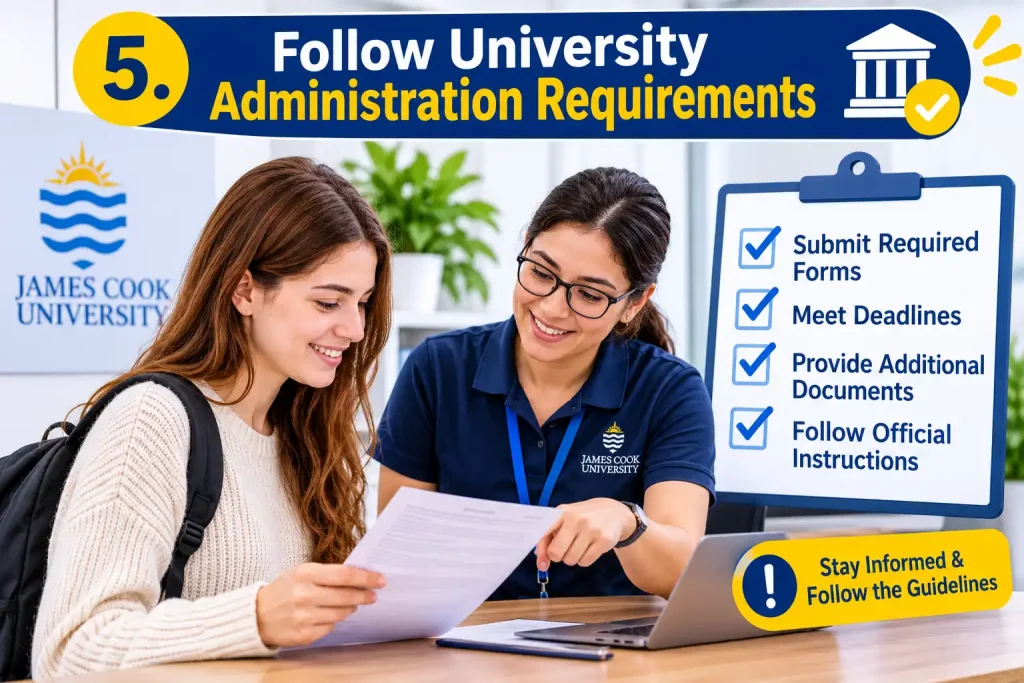
Some institutions may require students to resolve administrative matters or comply with document-collection procedures before their graduation documents can be issued or released.
Step-by-Step: How to Get Your Initial Testamur
Step 1: Confirm your course completion

Before expecting a Testamur, check that you have met all requirements of your award. Make sure your final results are released and that you have no outstanding course requirements.
You can begin by checking your university’s student portal, where academic results and enrolment information are generally made available.
Check these details:
- All required units or subjects have been passed.
- Any required placement, project or practical component is complete.
- Your final academic results have been released.
- Your course status reflects completion, where the portal provides this information.
If your completion status is unclear, contact your university’s student administration or graduation team.
Step 2: Verify your legal name and student details

The name printed on a Testamur is an important part of the official record. Before your award documents are prepared, check that your university has your correct legal name.
Review your student profile and look for spelling mistakes, missing names or outdated personal details. If a correction is required, contact the institution and ask what supporting evidence is accepted.
Also check your postal address if your university sends physical graduation documents by mail.
Tip: Confirming your personal details before conferral can help prevent avoidable certificate corrections or replacement requests later.
Step 3: Wait for official award conferral

Course completion and award conferral are separate administrative stages. Your university must formally approve and grant the qualification before your Testamur can be issued.
Watch your student email for notices about:
- Award eligibility
- Conferral dates
- Graduation registration
- Document availability
- Ceremony arrangements
- Certificate collection or delivery
Do not assume the certificate will be available immediately after the last exam. Universities may process awards according to scheduled conferral periods.
Step 4: Access your digital Testamur

Some Australian universities provide graduates with digital graduation documents through credential platforms such as My eQuals.
A digital Testamur can make it easier to access your award certificate without carrying the original paper document. Depending on the institution’s process, graduates may receive a notification or instructions for activating their digital credential.
Digital documents may allow you to:
- View your qualification online.
- Share a verified credential with an employer.
- Provide award evidence to another education provider.
- Access your graduation documents when needed.
For JCU graduates, consult the official university information for the current digital document delivery process:
Step 5: Receive or collect your physical certificate

The university may arrange for your physical Testamur to be presented during a graduation ceremony or delivered using its designated collection or mailing process.
Check your graduation instructions carefully. If the certificate is being posted, confirm your delivery address and review any instructions for international postage, where applicable.
Keep the original certificate in a secure place after receiving it. It is an official academic document, and replacing a lost original may require an application, supporting evidence and a fee.
Digital Testamur vs Physical Testamur
Universities may offer different document formats depending on their policies and graduation arrangements. Digital and physical certificates can both be valuable, but they serve slightly different practical needs.
| Feature | Digital Testamur | Physical Testamur |
|---|---|---|
| Format | Electronic credential | Printed certificate |
| Access | Online credential platform, where available | Personal possession |
| Sharing | Convenient digital sharing | Scan or photocopy when required |
| Storage | Secure online account, depending on platform | Safe physical storage |
| Common use | Verification and online applications | Ceremonies, records and formal presentation |
| Availability | Depends on university’s digital credential system | Depends on collection or delivery arrangements |
Why keep both versions?
If your university provides both formats, maintaining access to the digital Testamur while safely storing the physical certificate can be useful.
The digital version may be more convenient for applications, while the original paper certificate can be retained as an important personal and official record. Neither format should be assumed to replace every other academic document an organisation might request.
How to Navigate the JCU Testamur Help Page
James Cook University’s support article is a useful starting point if you want to understand the terminology or find information about the award certificate.
1. Open the JCU support article
Visit the official knowledge-base page:
2. Read the Testamur explanation
Review the information provided by JCU about the qualification certificate, its role and its relationship to graduation.
3. Identify any linked graduation resources
If you need information about conferral, ceremonies, document collection or graduation administration, follow relevant links provided by the university.
4. Find the correct support channel
If the article doesn’t answer your question, use the university’s official student support or graduation contact details to ask about your individual circumstances.
5. Check the latest instructions
Graduation processes can change. Before submitting an application or expecting delivery, confirm that you’re using the current forms, requirements and procedures.
Common Reasons Your Testamur May Be Delayed
Not receiving a Testamur immediately doesn’t necessarily mean something is wrong with your academic record. There may be several steps between finishing a course and receiving the final certificate.
| Possible issue | What you can do |
|---|---|
| Final results are not released | Check your student portal and assessment status |
| Award conferral has not occurred | Review official graduation or conferral announcements |
| Personal details require correction | Contact student administration |
| Outstanding course requirements | Confirm what remains to be completed |
| Document processing is underway | Follow university notifications and published timeframes |
| Delivery or collection arrangements are pending | Check your graduation instructions and address |
If you are concerned about a delay, contact the institution directly with your student details and a clear description of the issue. That is generally more useful than submitting duplicate document requests before the university has completed its conferral process.
How to Request a Replacement Testamur
A replacement Testamur may be needed if your original graduation certificate has been lost, damaged, stolen or requires correction. Universities normally have formal procedures for reissuing award documents, so a replacement is not simply a matter of printing another copy.
Before submitting a request, check your university’s rules to understand the required application form, evidence, processing charges and delivery options.
Replacement application process
Step 1: Find the replacement certificate policy
Visit your university’s official graduation or student administration website. Search for terms such as Replacement Testamur, Replacement Award Certificate, Graduation Documents or Academic Documents.
Step 2: Explain why a replacement is required
Your application may need to specify the reason for requesting another certificate, such as:
- Original Testamur lost or stolen
- Certificate damaged
- Legal name change
- Certificate correction
- Additional document requirements
Step 3: Gather supporting evidence
Depending on the reason, the university may request identity documents, a statutory declaration, the damaged original certificate, or official evidence of a name change.
Step 4: Complete the official application
Fill in the replacement document request form carefully. Ensure that your award details, student information, contact details and reason for replacement are accurate.
Step 5: Pay applicable fees
Some institutions charge a replacement fee or postage cost. Review the current fee information before submitting your application.
Step 6: Submit and wait for processing
Follow the university’s submission instructions and keep a copy of your application or payment confirmation. If you need the document by a particular date, contact the university to ask whether the expected processing time can meet your deadline.
What If You Need to Use Your Testamur Overseas?
Graduates applying for employment, education or official recognition in another country may be asked to provide an authenticated qualification document. The requirements depend on the destination country and the organisation receiving the certificate.
A regular university Testamur may be sufficient for some applications, while others may require additional verification, certified copies, legalisation or an apostille.
Understanding authentication and apostille requirements
- University verification: The institution may verify that the award was issued to you and that the certificate is genuine.
- Certified copies: Some organisations accept certified copies instead of the original Testamur.
- Authentication or legalisation: Additional government verification may be needed for overseas use.
- Apostille: Depending on the destination and applicable rules, an apostille may be required to authenticate a document for international acceptance.
In Australia, the Department of Foreign Affairs and Trade (DFAT) provides information about apostilles and authentication services.
Important: Don’t pay for authentication before confirming what the overseas organisation actually requires. Ask whether it accepts the digital Testamur, a certified copy, a university-verified document or a DFAT-authenticated original.
Best Practices for Protecting Your Testamur
Your graduation certificate is an important document that may be needed many years after completing your degree. Taking a few precautions when you first receive it can prevent unnecessary stress later.
Certificate protection checklist
- Store the physical Testamur in a dry, secure location.
- Keep a clear digital scan for your personal records.
- Maintain access to your digital credential account, if provided.
- Verify your legal name before the award document is issued.
- Avoid sharing sensitive personal details unnecessarily.
- Keep copies of replacement applications and supporting documents.
- Confirm your university’s official document procedures before ordering another certificate.
Common mistakes to avoid
| Mistake | Better approach |
|---|---|
| Assuming course completion means the certificate is ready | Confirm formal award conferral |
| Using a transcript when a Testamur is requested | Check the exact document required |
| Leaving an old mailing address on file | Update your address before graduation processing |
| Requesting a replacement without checking the policy | Read the university’s replacement requirements first |
| Assuming all overseas organisations accept digital documents | Confirm their verification and format rules |
| Waiting until the last minute for international applications | Request documents well before your deadline |
FAQs
Final Thoughts
A Testamur is the formal evidence that a university has awarded you a qualification. Understanding its purpose, the conferral process and the difference between a Testamur, transcript and other graduation documents helps you avoid confusion when dealing with employers, education providers or official organisations.
The most practical approach is to verify your completion status, keep your student details accurate, follow the university’s conferral instructions, and protect both your physical certificate and digital credentials. If you graduate from James Cook University, use its official support article as your starting point and contact the university directly for questions about your own award or document delivery.
Read More:
OARS.ACER: Complete User Guide to ACER Online Assessment and Reporting System
100 Days of School Costume: Complete Guide to Dress-Up Ideas
NQR Catalogue: Complete User Guide to Weekly Specials and Online Shopping
AITSL: Complete User Guide to Teacher Registration, Accreditation and Skills Assessment in Australia
NSW General Boat Driving Licence: Complete User Guide