Geelong Grammar is the name many families search when exploring independent education, boarding facilities and senior school opportunities in Victoria, Australia. Officially known as Geelong Grammar School (GGS), the institution was established in 1855 and provides education from the Early Learning Centre through to Year 12.
Located across several campuses, Geelong Grammar combines classroom learning with sport, creative activities, outdoor experiences and student wellbeing. Its approach to education is particularly associated with Positive Education, which brings wellbeing principles into the learning environment alongside academic development.
For parents considering private schooling, understanding the school’s locations, enrolment process, fees and educational pathways can make it easier to decide whether the school suits their child’s needs. International families can also explore the school’s admissions information to understand the requirements for overseas students.
The official Geelong Grammar School website is the best starting point for current admissions information, campus details, school tours and published fees.
Fore More Information:
Visit Homepage
What Is Geelong Grammar School Known For?
Geelong Grammar School is an independent, co-educational school serving students at different stages of their education. It offers both day schooling and boarding, making it an option for Victorian families as well as students who live farther away.
Several features distinguish Geelong Grammar from a conventional day school.
- A long educational history: Founded in 1855, the school has a longstanding presence in Australian education.
- Positive Education: Student wellbeing and personal development form part of its educational philosophy.
- Boarding opportunities: Residential facilities allow eligible students to attend from outside the immediate local area.
- Timbertop: The Year 9 programme provides a distinctive outdoor and residential learning experience.
- Senior academic pathways: Students can explore the Victorian Certificate of Education (VCE) and International Baccalaureate Diploma Programme (IBDP), subject to current school offerings and eligibility.
- Multiple campuses: Different locations serve particular age groups and educational stages.
Families researching Geelong Grammar should look beyond reputation alone. Consider the daily learning environment, travel arrangements, boarding requirements, total costs and the kind of support a student may need to thrive.
Geelong Grammar Campuses Explained
Geelong Grammar operates across campuses designed for different stages of a student’s development. Knowing which campus serves the required year level is an essential first step before making an enquiry.
1. Corio Campus — Geelong, Victoria
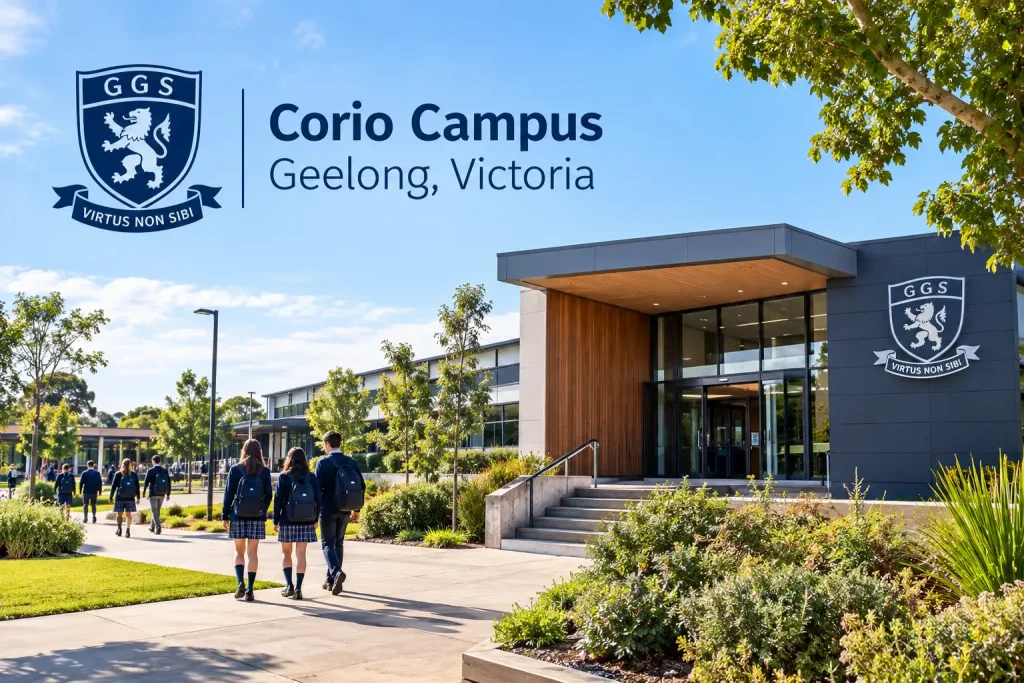
Corio is the school’s principal campus. The supplied school information identifies it as the location for the Early Learning Centre, Middle School Years 5–8 and Senior School Years 10–12. Its extensive grounds support academic learning, sport, arts and boarding life.
Families should confirm the relevant year-level arrangements directly with the school, particularly when planning a transition between campuses.
2. Timbertop Campus — Victorian High Country
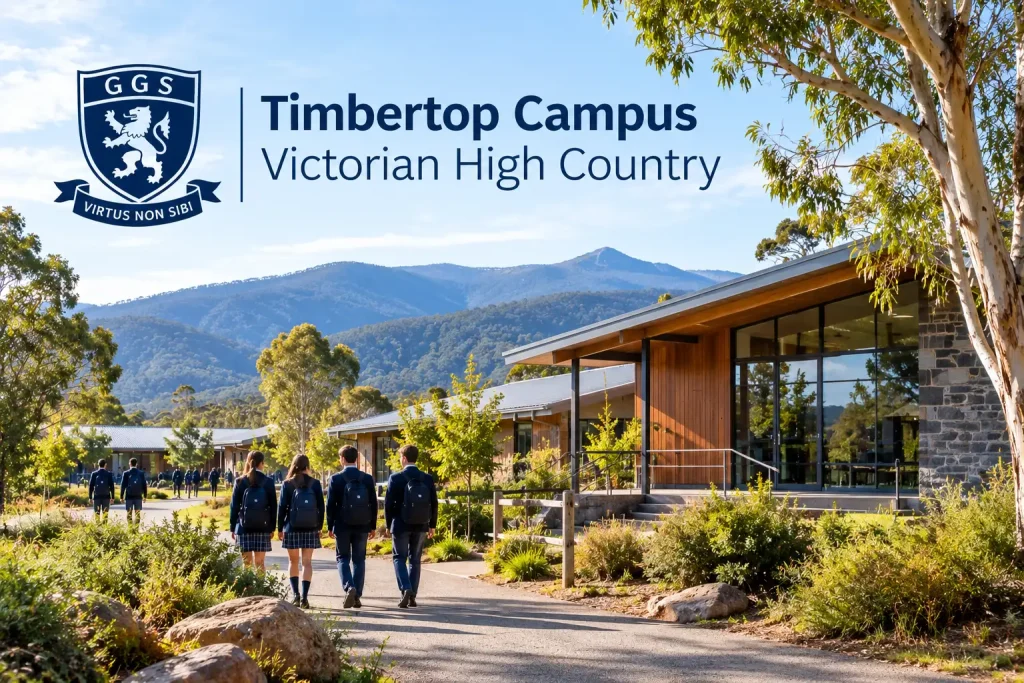
Timbertop is associated with the school’s Year 9 programme. Set in a mountain environment near Mansfield, it provides a residential outdoor education experience that emphasises independence, teamwork, practical responsibility and resilience.
Rather than focusing solely on conventional classroom routines, students take part in outdoor activities and learn to manage aspects of everyday life in a more remote setting.
3. Toorak Campus — Melbourne
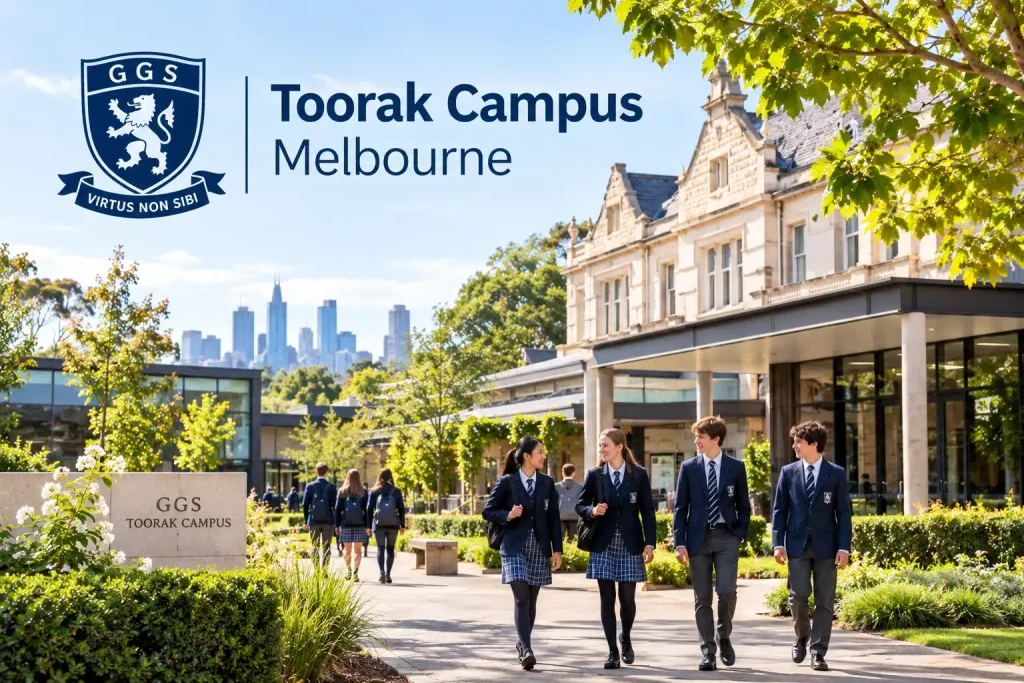
Toorak serves younger students in Melbourne’s inner suburbs. The supplied information describes provision from the Early Learning Centre to Year 6, with expansion towards Year 8 planned by 2028.
Parents interested in early learning or primary education should ask about the current year-level range, future campus plans and the transition arrangements for older students.
For the latest information about locations and year levels, use the school’s official website rather than relying on an older directory listing.
Understanding the Geelong Grammar Educational Approach
Positive Education and student wellbeing
One of the most recognisable aspects of Geelong Grammar is its association with Positive Education. This approach connects wellbeing with learning and encourages students to develop skills that can support their academic progress and personal lives.
The intention is to consider the whole student, not just examination results. Depending on the programme and year level, this broader approach may connect with relationships, self-awareness, engagement, resilience and a sense of purpose.
For parents, it is worth asking how these principles appear in everyday school life. You may want to learn about pastoral care, student support, teacher communication and the processes available when a student experiences academic or personal difficulties.
Learning beyond the classroom
Geelong Grammar also places importance on experiences outside conventional lessons. Sport, arts, outdoor education and boarding activities can give students opportunities to develop interests, practise collaboration and take on new responsibilities.
Timbertop is a particularly distinctive example of this philosophy. Its Year 9 residential programme creates a different learning environment in which outdoor challenges and shared responsibilities form part of the experience.
Families should discuss any programme-specific expectations, physical requirements, support arrangements and practical preparation with the school before enrolment.
Geelong Grammar Admissions: How to Apply
Families planning to enrol a child at Geelong Grammar should begin by checking the school’s official admissions information. Application timing, available places, year-level entry and the requirements for domestic and overseas applicants can differ.
The school encourages prospective families to connect with its admissions team, attend a tour or open event, and learn about the campus before making a decision. Start here: Geelong Grammar enrolment information.
Step 1: Explore the school
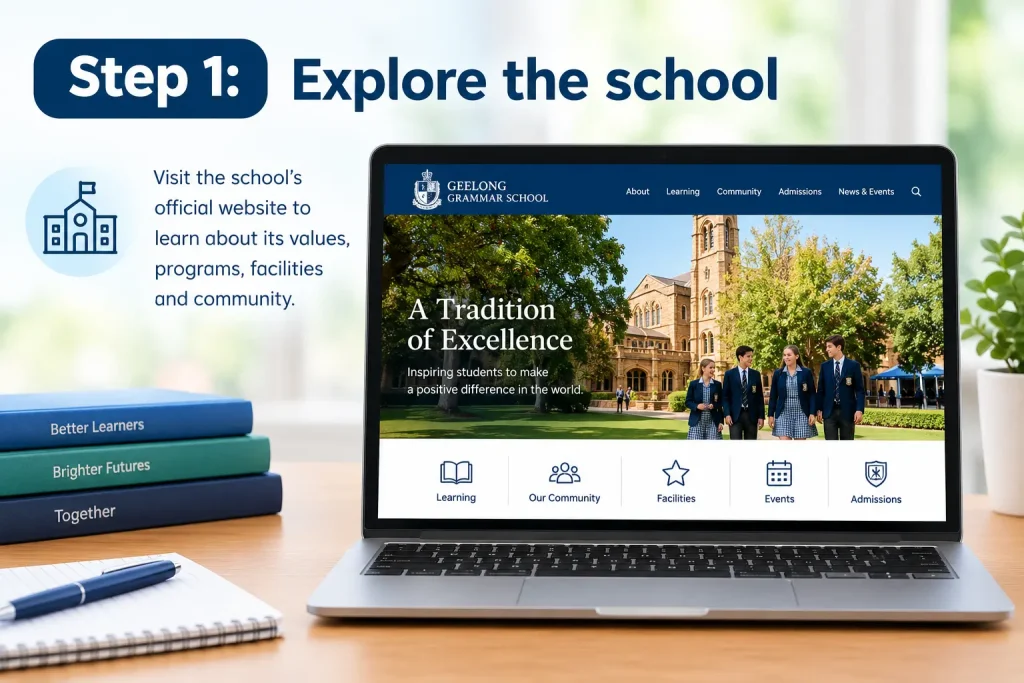
Visit the official Geelong Grammar website to review campuses, educational programmes, boarding arrangements and the relevant entry year. Contact admissions if you are unsure which campus to choose.
Step 2: Complete the application
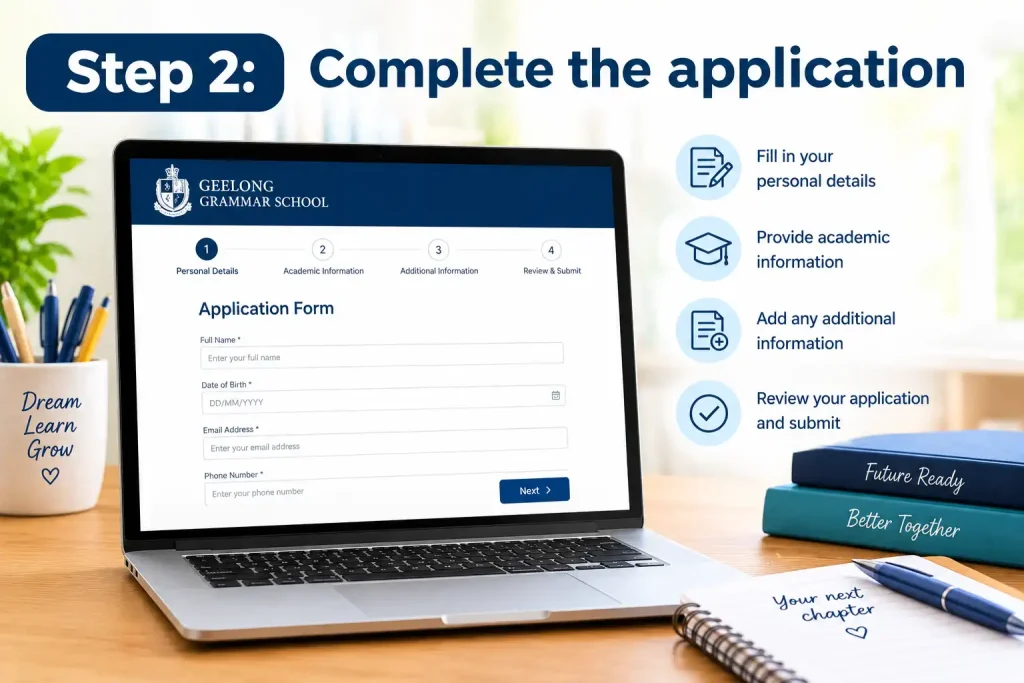
Use the school’s current application process and enter the student’s details carefully. Check names, dates and contact information before submitting the form.
Step 3: Provide supporting documents
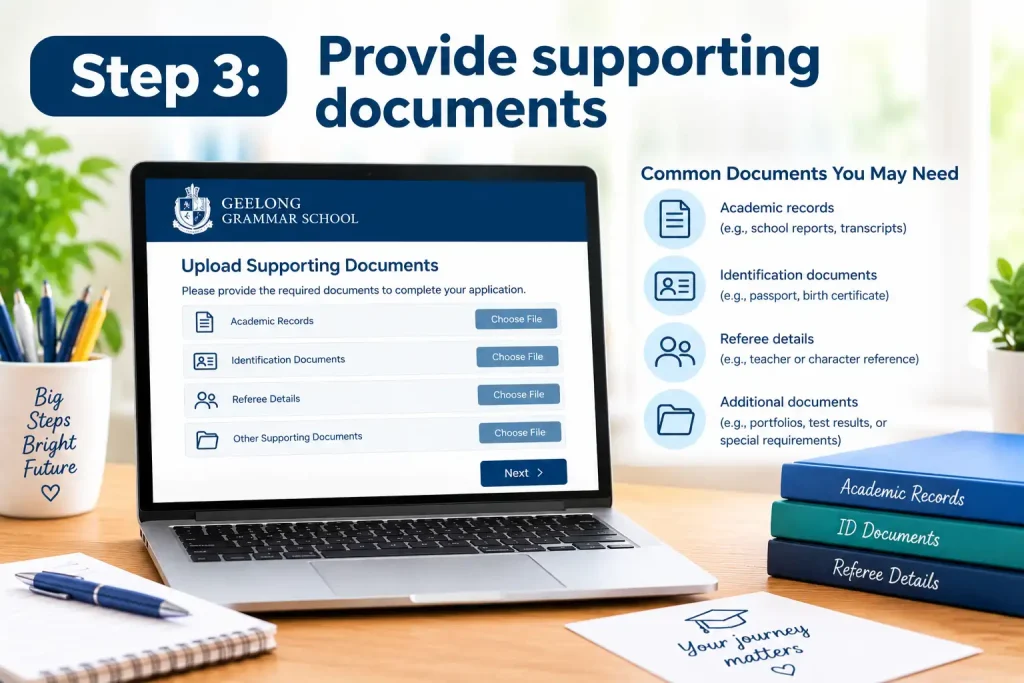
Upload or submit the records requested by admissions. Keep copies of the application and any confirmation messages for your reference.
Step 4: Follow up with admissions

Ask about application status, vacancies, possible interviews and any additional assessment. An application should not be treated as a confirmed place until the school provides the relevant confirmation.
Step 5: Review and accept an offer

If the school offers a place, carefully check the acceptance deadline, enrolment conditions, deposit and fee schedule before confirming the enrolment.
Is early application recommended?
Yes. Families considering a particular entry year should enquire early, especially when boarding is involved. However, application timing does not guarantee admission, and families should ask the school directly about current availability rather than assume that a place will be offered.
Geelong Grammar Fees in 2026
The cost of attending Geelong Grammar depends on the campus, year level, domestic or overseas student status, and whether the student attends as a day student or boarder.
The school’s published 2026 fee schedule provides the appropriate figures for planning.
The following examples are annual fees in Australian dollars (AUD) for domestic students, based on the published 2026 schedule.
| School level or arrangement | Annual fee (AUD) |
|---|---|
| Corio Early Learning Centre, 5 days per week | $22,660 |
| Corio Prep | $22,660 |
| Corio Year 4 | $35,000 |
| Corio Years 5–6, day student | $40,140 |
| Corio Years 7–8, day student | $45,740 |
| Corio Years 7–8, full boarder | $89,280 |
| Corio Years 10–12, day student | $55,380 |
| Corio Years 10–12, full boarder | $93,840 |
| Timbertop, full boarding and tuition | $93,840 |
Source: official 2026 fee schedule. Fees can change, and inclusions, exclusions and additional charges depend on the student’s arrangement.
Application fees and enrolment fees
The published 2026 fee information lists a non-refundable application fee of AUD $350 for Australian citizens, permanent residents and temporary residents, and AUD $500 for full-fee-paying overseas students.
After an offer is made, a separate enrolment fee applies. The published schedule lists AUD $1,000 for eligible Early Learning Centre enrolments, AUD $2,500 for Prep to Year 12 students excluding Year 9, AUD $5,000 for Year 9, and AUD $5,500 for full-fee-paying overseas students. Check the official fee schedule for the applicable terms and conditions.
Fore More Information:
Visit Homepage
What should families include in their budget?
Tuition is only one part of the cost of schooling. Depending on the student’s programme, families may also need to account for:
- Uniforms and personal equipment.
- Books, learning materials and other school charges.
- Excursions and co-curricular activities.
- Transport to and from campus.
- Boarding-related personal expenses.
- Any additional costs identified in the school’s fee schedule.
For a realistic comparison, calculate the full annual cost rather than looking only at tuition. If your child is considering boarding, also ask which services are included in the boarding fee and which expenses remain the family’s responsibility.
Geelong Grammar Scholarships and Financial Assistance
A Geelong Grammar education can involve significant annual expenses, but the school offers scholarships and other forms of financial assistance to eligible students. Awards may recognise academic ability, general excellence, music, sport or other achievements, depending on the specific programme.
The official Geelong Grammar scholarships page explains available categories, eligibility requirements and application dates.
Types of scholarships
- Academic scholarships: For students who demonstrate strong academic potential.
- General Excellence scholarships: Consider academic attitude, character, work ethic, participation and broader achievements.
- Music scholarships: For students who demonstrate musical ability and commitment.
- Sport scholarships: For eligible students with sporting ability.
- Rural and Regional scholarships: Designed to assist eligible students from rural, remote or regional Australian communities.
- Boarding scholarships: Boarding assistance may be available through particular scholarship categories.
Not every scholarship is open to every year level or applicant. Some awards have residency requirements, assessment examinations, interviews or financial means testing.
How to apply for a scholarship
- Read the individual scholarship conditions on the official website.
- Check the eligible entry year, citizenship or residency rules, and application deadline.
- Register for the required assessment or examination.
- Prepare academic reports and evidence of relevant achievements.
- Provide financial information if requested for a means-tested award.
- Attend an interview if shortlisted and wait for the school’s decision.
Planning note for 2028 entry: The school’s published scholarship information states that applications for the 2028 major scholarship programme open on 2 November 2026 and close on 1 February 2027, with the scholarship examination scheduled for 20 February 2027. Sports scholarship dates differ, so consult the official scholarship information for updates.
Scholarship applications are competitive. Families should not assume that submitting an application guarantees financial assistance, and they should prepare a budget that remains workable if an award is not granted.
Boarding at Geelong Grammar School
Boarding is a major consideration for families exploring Geelong Grammar. It allows students who live outside the local area to attend school while living in a supervised residential environment.
The school’s boarding arrangements are connected with its house system, pastoral care and academic programme. Boarding can provide a structured routine, opportunities for friendships and access to school activities beyond normal classroom hours.
What is boarding life like?
A boarding routine may include:
- Scheduled study and homework time.
- Meals and shared community activities.
- Access to pastoral support and residential staff.
- Participation in school sport and co-curricular programmes.
- Daily routines designed to balance learning, rest and other responsibilities.
Families should ask about house arrangements, supervision, health support, weekend activities, leave procedures and communication with parents before accepting a boarding place.
What makes Timbertop different?
Timbertop provides a distinctive Year 9 experience in the Victorian High Country. The programme combines residential living with outdoor education and shared responsibilities.
Students encounter a different environment from a conventional urban or suburban school campus. Outdoor activities and group experiences are intended to develop independence, teamwork and practical skills.
Parents considering this programme should discuss the schedule, equipment requirements, safety arrangements and available support with the school. They should also understand how the Timbertop year fits into the student’s wider academic pathway.
Academic Programmes at Geelong Grammar
Geelong Grammar offers education across several stages, from early learning to senior secondary school. The curriculum develops as students move through different year levels, with increasing opportunities to specialise in subjects and prepare for further education.
Early Learning, Primary and Middle School
In the earlier years, students develop foundational skills in literacy, numeracy, science, humanities and other areas of learning. Inquiry-based activities can encourage students to ask questions, explore ideas and apply their knowledge.
As students progress, they build more advanced study habits and encounter a broader range of subjects. Families should review the curriculum for the relevant campus and year level rather than assume that every subject or activity is available at every stage.
Senior school: VCE and the International Baccalaureate
Senior students can explore two recognised academic pathways, subject to the school’s current programme offerings.
Victorian Certificate of Education (VCE)
The VCE is Victoria’s senior secondary qualification. It allows students to select subjects that match their strengths, interests and future study plans, within the requirements of the qualification.
May suit students who: Prefer a subject-based programme aligned with Victorian secondary education.
International Baccalaureate Diploma Programme (IBDP)
The IB Diploma Programme is an internationally recognised pre-university pathway. It combines subject study with broader elements such as research, critical thinking and community engagement.
May suit students who: Want a broad academic programme with an international perspective and are comfortable managing several interconnected requirements.
Neither pathway is automatically the best choice for every student. Families should compare subject availability, assessment methods, workload, university prerequisites and the student’s preferred learning style.
International Students: Requirements and Preparation
Geelong Grammar welcomes students from overseas and has a long history of international enrolment. For international families, the admissions process involves more than selecting a campus and paying tuition fees.
What should overseas families check?
English-language preparation: Ask admissions whether English-language evidence, an assessment or additional support is required for the intended entry year.
Student visa requirements: Families should confirm the appropriate visa arrangements using official Australian immigration information. A school application or offer does not, by itself, provide permission to study in Australia.
Fees and enrolment conditions: Overseas students may pay different tuition and boarding rates from domestic students. Review the overseas fee schedule and the relevant enrolment agreement.
Travel and accommodation: Confirm who is responsible for travel arrangements, airport transfers, guardianship where applicable and any requirements for students living away from their families.
Application support: Families can contact the school’s admissions team to clarify documents, deadlines, availability and any approved-agent arrangements.
For visa information, use the Australian Government’s Department of Home Affairs website. For school-specific requirements, refer to Geelong Grammar enrolment.
Fore More Information:
Visit Homepage
Is Geelong Grammar the Right School for Your Child?
Before making a decision, consider how the school matches your child’s educational needs and your family’s circumstances.
- Academic fit: Does the curriculum offer appropriate subjects and learning support?
- Wellbeing: Are the school’s pastoral care arrangements suitable for your child?
- Boarding: Would your child feel comfortable living away from home, if boarding is required?
- Location: Can your family manage travel, campus transitions and school holidays?
- Financial planning: Can you meet the total cost, including possible additional expenses?
- Future plans: Do the available senior school pathways support your child’s intended further education?
A school visit can help answer questions that a website cannot. Ask to learn about a typical school day, student support, class expectations and the transition between year levels.
Fore More Information:
Visit Homepage
FAQs
Final Thoughts
Geelong Grammar offers families a combination of academic pathways, boarding opportunities, outdoor education and a strong focus on student wellbeing. Its multiple campuses and varied programmes mean that the right choice depends on the student’s age, learning preferences, family location and future goals.
For parents researching the school in 2026, the most practical next step is to review the official enrolment and fee information, arrange a conversation with admissions and clarify any questions about scholarships or boarding before making a commitment.
Read More:
Literacy Pro: Complete User Guide for Australian Students and Teachers (2026)
MyMurdoch Learning Guide 2026: Login, Courses, Features and Student Support
Toy Theatre: History, Ideas, Making Guide & Australian Collection
Book Week Costumes: Ideas, DIY Options and Easy Choices for 2026
SEQTA Login Guide 2026: Learn, Engage and School Portal Access