MyUNSW is the main online access point for many administrative tasks at UNSW Sydney. Students can use the portal to manage enrolment, review their academic information, check class and timetable details, view results and reach other university services.
For most students, access starts with a UNSW zID and zPass. The official MyUNSW portal provides the sign-in point and connects students with personalised services available to their account.
MyUNSW: What Students Can Access
Rather than being just a login screen, MyUNSW brings together several areas of student administration. What you see after signing in depends on your student status and the services currently enabled for your account.
Common tasks include:
The portal’s My Student Profile area is particularly useful because it provides personalised student services and enrolment information.
For example, at the beginning of a teaching period, a student may use moodle unsw to confirm their courses, register for classes and review their timetable before classes begin.
How to Access MyUNSW in 2026
Use the official UNSW portal whenever possible. This reduces the risk of entering your university credentials into an unofficial login page.
1. Visit the MyUNSW portal
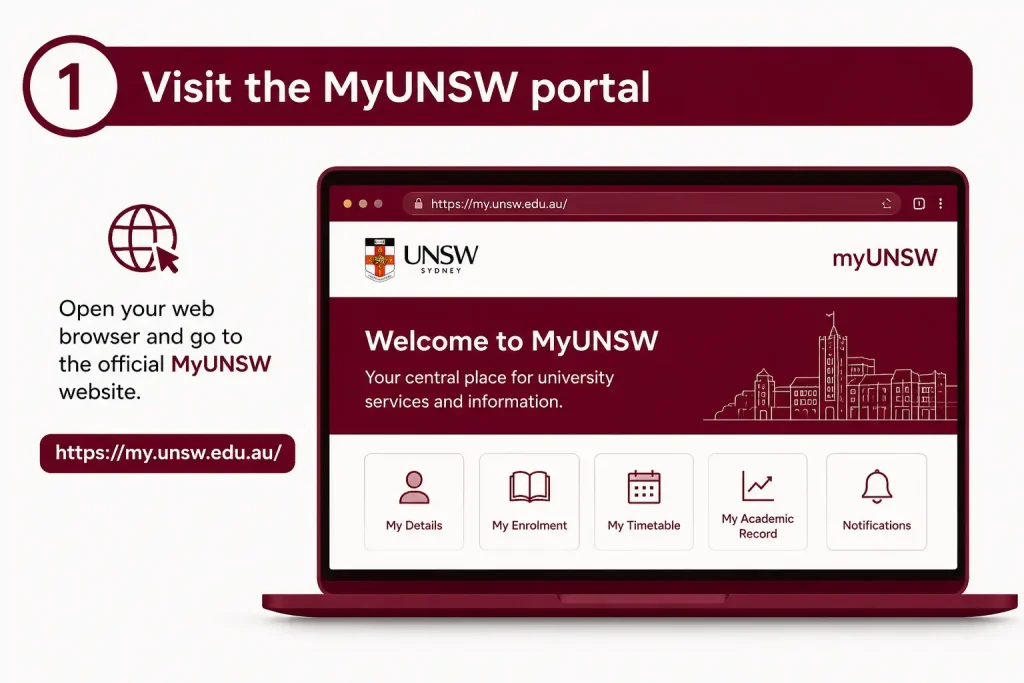
Open:Offical Website
On the official homepage, look for the Sign On option.
2. Choose “Sign On”
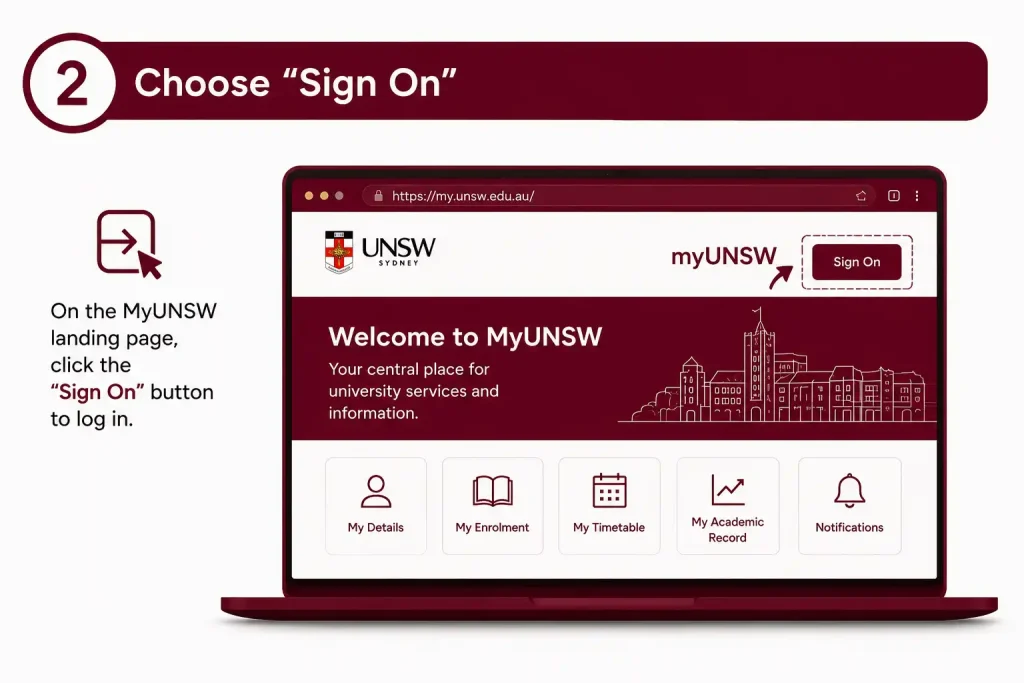
Select Sign On to continue to the UNSW authentication service.
The next screen is where you will provide your university login credentials.
3. Enter your UNSW zID
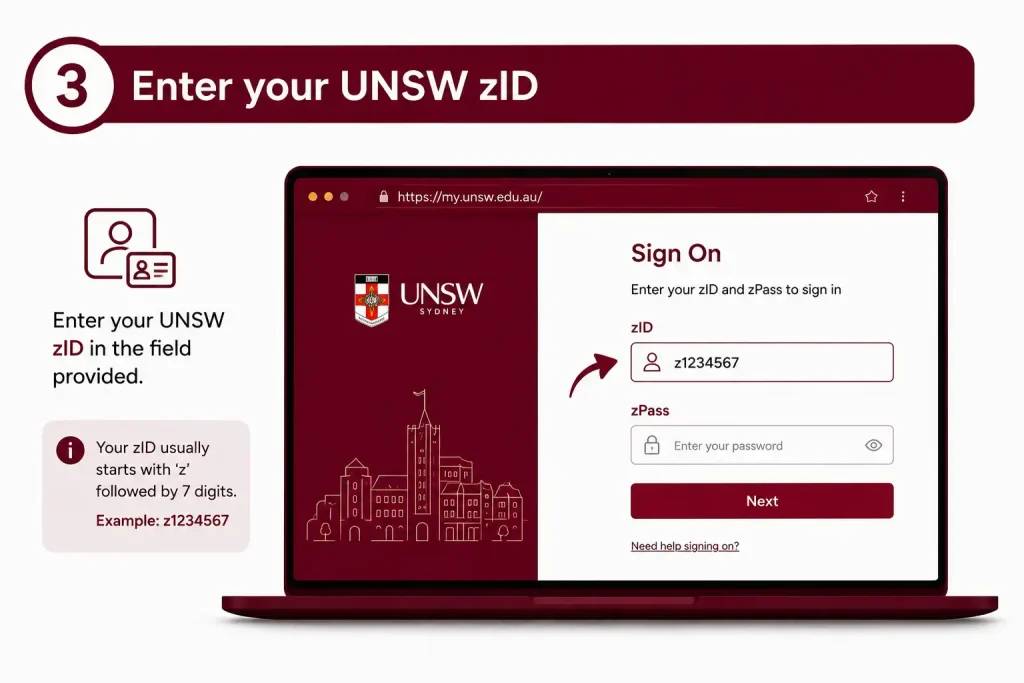
Your zID is your UNSW user ID. For students, it normally consists of the letter z followed by seven digits, for example:
z1234567
Enter the zID requested by the login screen. Unless a particular UNSW service specifically asks for an email address, use your zID for the student login.
4. Provide your zPass
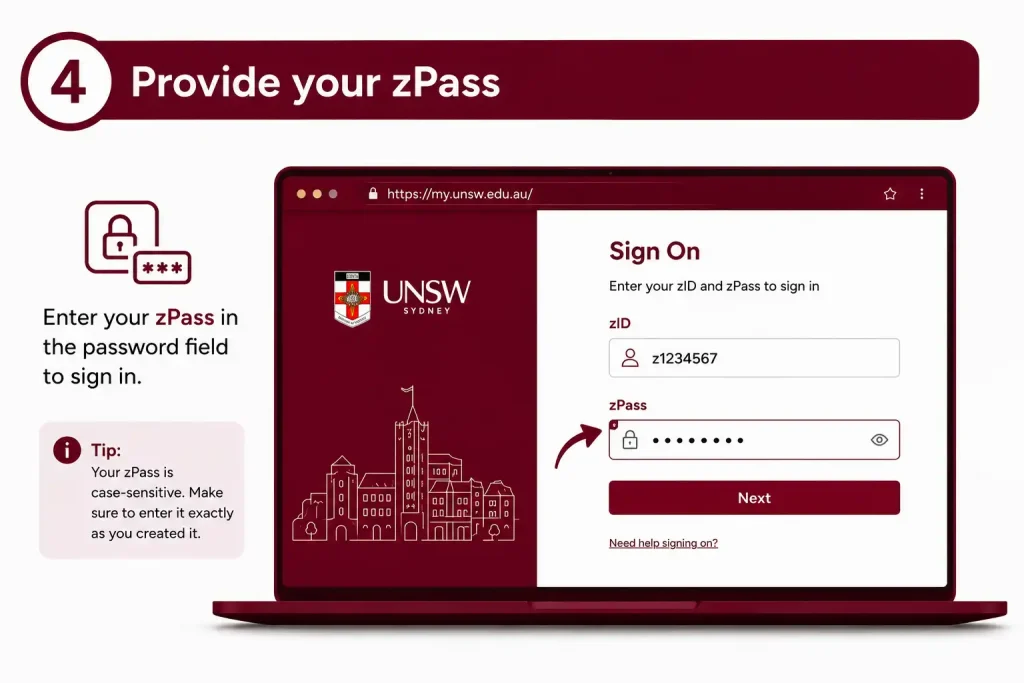
Type your current zPass into the password field.
Because passwords are case-sensitive, check your keyboard settings if the password is being rejected. Avoid repeatedly entering guesses, as unsuccessful attempts can lead to an account lockout.
5. Follow any security prompts
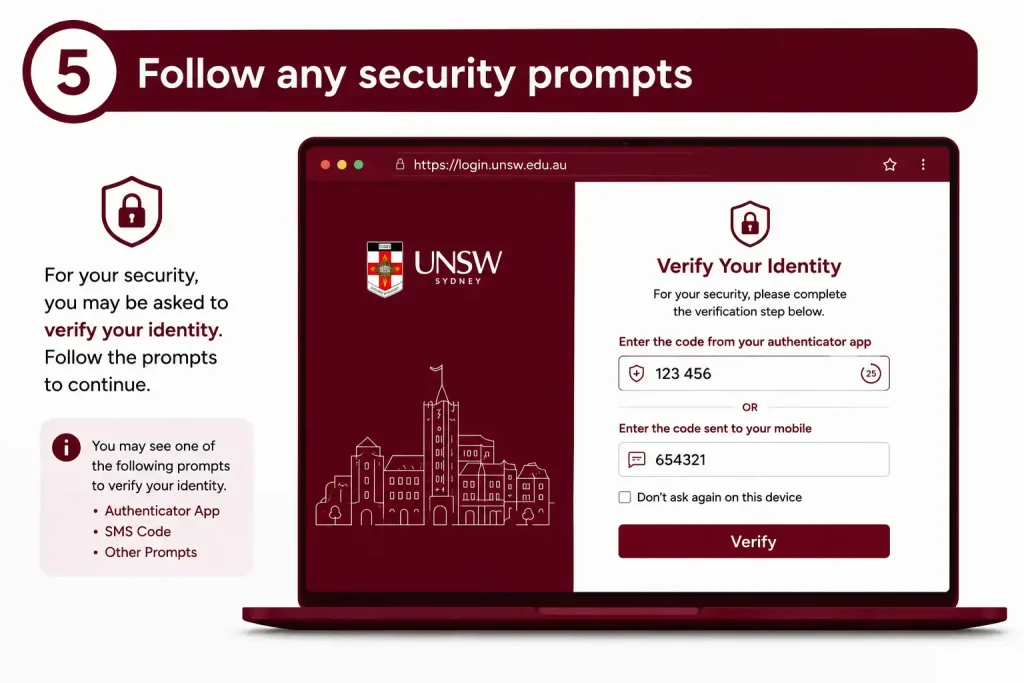
Complete any additional authentication or security steps presented during sign-in.
Once authentication succeeds, you should reach the relevant moodle unsw student area.
Important: A successful login does not necessarily mean every UNSW function will be visible. The options available can differ according to your account, student status and access permissions.
Fore More Information:
Visit Homepage
What to Do Once You’re Signed In
Logging in is only the first step. Your student profile is worth checking regularly because it can contain information relating to your current enrolment and university administration.
After entering moodle unsw, consider checking these areas:
A quick review can help identify an outstanding administrative task before it turns into a last-minute problem.
Using MyUNSW for Course Enrolment
Course enrolment is one of the main reasons students return to moodle unsw There is, however, an important distinction between enrolling in a course and registering for classes.
UNSW describes these as two stages. Adding a course does not necessarily mean that you have finished selecting the individual classes associated with it.
A typical enrolment path
Depending on the options shown in your account, the process may follow this general route:
moodle unsw → Enrolment → Update Enrolment → Select programme/year → Choose courses
The precise screens and available choices can vary depending on your programme and the current enrolment system.
Before selecting a course, have its official course code available. Searching by the correct code can be more reliable than trying to identify a subject using a broad description.
Check these details before confirming
Review the following before finalising your course choices:
Remember the class-registration stage
One of the easiest mistakes to make is stopping after adding your courses.
UNSW’s enrolment guidance explains that students also need to complete the class-registration process and select their class times before the relevant term. Depending on the course, this may involve choosing lectures, tutorials, laboratories or other class components.
So, after updating your course enrolment, check whether a separate class-registration action is still required.
Finding Your UNSW Timetable
Once your courses and classes are arranged, reviewing the timetable helps you understand how your week will look.
The timetable can provide useful details such as:
How to view your timetable in MyUNSW
A typical route is:
moodle unsw → Student enrolment area → Programme/year → Update Enrolment → View Timetable
From there, choose the appropriate teaching period and review the classes shown.
Look carefully for overlapping sessions. It is also worth checking the time between classes, particularly when classes take place in different locations.
Make better use of the timetable view
The timetable can be useful in two different ways. A detailed list makes it easier to check individual class information, while a weekly view gives you a clearer picture of your overall schedule.
| Timetable view | Best used for |
|---|---|
| List view | Checking individual class times, locations and details |
| Weekly view | Reviewing your weekly routine and spotting clashes |
UNSW also notes that students can move between previous and future weeks in the timetable and download a personal iCal link for use with a preferred calendar application.
If you need to change a class, return to the relevant class-registration or enrolment area and use the options available for your course and teaching period.
Checking Academic Results Through MyUNSW
moodle unsw is also an important place to check your academic results. UNSW publishes final results through moodle unsw after the relevant release time, and results are also sent to the student’s university email account for most teaching periods.
Look for the academic results or academic-record section within your student services.
A general route may look like:
moodle unsw → Student academic information → Results / Academic Record
The exact wording of the menus can change as UNSW updates its systems, so focus on the academic information or results option available in your account.
Select the correct teaching period
If you are checking a particular result, make sure you have selected the right teaching period. Results are released according to the relevant UNSW academic calendar, and different teaching periods can have different release dates.
For example, UNSW currently lists:
| Teaching period | 2026 results release |
|---|---|
| Term 2, 2026 | 3 September 2026 |
| Term 3, 2026 | 17 December 2026 |
If a result is not visible when you expect it, check the official UNSW results-release schedule first. The result may simply not have reached its scheduled release time.
Understanding your grades
Academic records can include abbreviated grade codes and other academic information. When you need to understand a particular grade or academic-standing outcome, use UNSW’s current official grading guidance rather than relying on an unofficial interpretation.
MyUNSW Login Problems: What to Check
A failed login does not always mean that the moodle unsw portal itself is unavailable. Start with the basics before assuming there is a wider system problem.
If your zID or password is rejected
Check that:
If your account has become locked, follow UNSW’s account-support guidance and contact the IT Service Centre when required.
If you can log in but cannot find a service
Not every student account displays exactly the same options. Services can depend on your programme, student status and the access associated with your account.
First, check that you are in the correct student area and that you have selected the relevant teaching period or programme.
If timetable information looks wrong
Check that you have:
If the information still does not match your enrolment, use the appropriate UNSW student or enrolment support channel.
A Practical MyUNSW Routine for Students
You do not need to spend a long time inside the portal every day. A short check at useful points in the academic year is often more practical.
Before a new term
Review:
During the term
Keep an eye on:
Around results release
Check:
This approach makes moodle unsw a useful administrative checkpoint rather than something you only visit when there is a problem.
MyUNSW Quick Reference
| Task | Where to look |
|---|---|
| Student login | moodle unsw → Sign On |
| Course enrolment | Enrolment / Update Enrolment |
| Class registration | Relevant enrolment or class-registration area |
| Timetable | Update Enrolment → View Timetable |
| Academic results | Student academic information / Results |
| Student information | My Student Profile |
| Login problems | UNSW IT support |
Managing Your MyUNSW Timetable and Changing Classes
Once your courses are enrolled, your timetable should be the next thing you review. Having the correct courses on your record doesn’t necessarily mean your weekly schedule is settled, so check the available class options and make sure your selections work together.
Open the enrolment area in moodle unsw and find the timetable or class-registration options for your teaching period. Check the details for each class rather than relying only on the course title.
Pay attention to:
Dealing with timetable clashes
If two classes overlap, return to the relevant enrolment or class-registration section. If another class section is available, moodle unswmay allow you to move to a different option.
Before changing anything, review your whole weekly timetable. Moving one tutorial could fix an overlap but create a conflict somewhere else.
Best practice: Save or export your updated timetable once your changes are finished so you have the latest version available for reference.
Viewing Your Academic Record and Results
Your academic record gives you a useful picture of your progress at UNSW. moodle unsw provides access to results and other academic information connected with your studies.
To check your results:
Always confirm that you’ve selected the correct teaching period, especially if you’ve taken subjects across several terms or other teaching periods.
If you’re unsure about a grade code or academic outcome, refer to the current official UNSW grading information. The university’s own academic resources should be used as the authoritative reference for grading rules.
Keeping your academic information
It can be useful to keep personal records of important results and academic documents. Having these available can help with later applications, study planning and other university administration.
For official purposes, though, use the formal document or transcript issued by UNSW rather than treating a screenshot from moodle unsw as an official record.
MyUNSW Login Problems: Checks Worth Trying
There are several reasons a moodle unsw sign-in might fail, and an incorrect password isn’t always the cause.
Make sure your zID is correct
Check that you’re using the correct UNSW user ID. One common mistake is entering a personal email address when the login screen expects your UNSW zID.
Check your zPass
Your password is case-sensitive. Check Caps Lock and make sure there are no accidental spaces before or after the password.
Start from the official MyUNSW portal
If you’re unsure where to begin, return to:
Official moodle unsw
Avoid using third-party pages as your usual route to the university login.
Try a different browser
An outdated or malfunctioning browser can sometimes interfere with the sign-in process. Try a current browser, or completely close and reopen your existing browser before trying again.
Clear cookies and cached data
An old login session may interfere with authentication. Clearing the relevant cookies and cached website information can sometimes resolve this type of problem.
Check your connection
A poor internet connection can prevent the login page from loading properly or interrupt the authentication process.
Don’t keep guessing the password
If you can’t remember your zPass, use the official recovery process instead of repeatedly trying different passwords. UNSW’s login guidance advises users who become locked out to contact the IT Service Centre.
What to Do When MyUNSW Displays an Error
Not every moodle unsw error is caused by your login details.
If an error appears after authentication, note the exact wording before closing the page. A specific error message can help UNSW support identify which service is affected.
Before contacting support, make a note of:
Never provide your password when asking for technical assistance.
If the issue continues, use official UNSW support channels rather than relying on advice from social media or unofficial forums.
MyUNSW Is Only One Part of the UNSW Online System
Although moodle unsw provides access to many student administration functions, it isn’t necessarily the only platform you’ll use during your degree.
Different UNSW systems can handle different activities. For instance, you might manage academic administration through moodle unsw while completing learning-related activities through another university service.
This distinction matters when troubleshooting. If you can sign in to moodle unsw but one particular learning or university service won’t open, the problem may be with that separate service rather than your moodle unsw account.
Protect your UNSW login details
Your zID and zPass are personal credentials and should be kept private.
Never:
If you believe someone else may know your credentials, change your password through the official UNSW process and follow the university’s security advice.
Accessing MyUNSW on a Phone or Tablet
moodle unsw and other web-based university services can be accessed from a modern mobile device, although the layout may not look exactly the same as it does on a desktop.
For mobile access:
A phone can be convenient for checking a timetable, reviewing results or confirming course information. For more detailed enrolment work, a laptop or larger screen can make it easier to compare course and timetable details.
MyUNSW Tasks and Where to Find Them
| Task | Starting point | Details to check |
|---|---|---|
| Student Login | Official moodle unsw | zID and zPass |
| Course Enrolment | Student enrolment area | Course, term and programme |
| Class Registration | Enrolment/class-registration area | Class section and time |
| Timetable | View Timetable | Days, times and locations |
| Results | Academic record/results area | Correct teaching period |
| Password Recovery | UNSW Identity Manager | zID and verification |
| Technical Support | Official UNSW support | Error and affected service |
UNSW can change the wording or location of online menu options as its systems are updated. When in doubt, follow the options currently shown in your own account.
Common MyUNSW Errors Students Should Avoid
Going through an unofficial login page
Reduce phishing risks by starting from the official UNSW website or entering the known moodle unsw address directly into your browser.
Assuming course enrolment is the end of the process
Adding a course doesn’t necessarily mean you’ve selected every required class. Check whether class registration is also needed.
Ignoring your complete timetable
Your individual classes may be correct while still creating a clash. Review the full weekly schedule after making changes.
Resetting your zPass without checking other causes
If you’re unsure whether your password is the problem, first check your zID, browser and internet connection. Use the reset process when a password change is actually needed.
Looking at the wrong teaching period
When checking results or timetable information, confirm that the selected term or teaching period is the one you’re looking for.
Giving your password to someone else
Your UNSW credentials should remain private. Don’t give your zPass to another student, friend or anyone claiming to offer technical support.
Frequently Asked Questions About MyUNSW
Official UNSW Resources You May Need
These official resources cover the main account and student-management tasks associated with moodle unsw:
| Resource | Purpose |
|---|---|
| moodle unsw | Main student portal |
| UNSW Identity Manager | Account and password management |
| UNSW Student Website | Student information and support |
| UNSW Class Registration | Class registration and timetable guidance |
| UNSW Results Information | Results and academic information |
When dealing with passwords, enrolment or academic records, rely on official UNSW resources for the latest procedures.
A Practical MyUNSW Routine for Each Term
You do not need to spend a long time navigating moodle unsw. A consistent routine can help keep your university administration organised.
Before the term starts
Review your programme and planned courses in moodle unsw. Make sure the courses you intend to take fit your study plan and the relevant teaching period.
When enrolling
Check each course carefully before confirming your choices. Pay attention to course codes and any applicable enrolment conditions.
When completing class registration
Select suitable class sections and then review your full timetable. Look for clashes, awkward gaps or other scheduling issues before finalising your selections.
Throughout the term
Return to moodle unsw whenever you need to check academic or administrative information. Keep up with university communications so you do not miss important actions or deadlines.
After results are released
Check your academic results through the official system and make sure you are viewing the correct teaching period.
Final Takeaway
MyUNSW is the central UNSW student portal for managing key university tasks, including enrolment, class timetables, fees, academic records and results.
For a smooth experience, always begin with the official MyUNSW portal and sign in using your UNSW credentials. If you need to reset your zPass, use the official UNSW Identity Manager rather than an unofficial website.
Remember that UNSW uses a two-step enrolment process: first select your courses, then complete class registration and choose your class times.
Once logged in, regularly check your enrolment, timetable and academic results, and keep your account credentials secure. Using official UNSW resources is the best way to keep your student information accurate and up to date.
Read More:
Department of Transport and Main Roads (TMR) Queensland: Complete Online Services Guide 2026
ATO Online Services for Business Login 2026: Complete Portal Guide
Google Scholar 2026: Search, Citations, Profiles, Alerts & Research Guide
Australian Passport Renewal 2026: Complete Online Guide
City of Perth Staff Portal 2026: Login, CI Anywhere, Intranet & Remote Access Guide
Australian Passport Renewal 2026: Complete Online Guide