Helping a child build strong literacy skills often takes more than occasional reading practice. Reading Eggs gives families an online learning environment where children can work on phonics, spelling, vocabulary, comprehension, fluency and early reading through lessons, games, books and other interactive activities.
The platform offers different programmes for different stages of development, allowing younger children to work on early literacy while older learners can move towards more advanced reading and comprehension activities.
Parents in Australia can visit the official eggs reading Australia website to explore programmes, register an account, create child profiles and access available learning resources.
What Does Reading Eggs Do?
eggs eggs reading is an online learning platform designed to support children’s literacy development through guided digital activities. Instead of depending on a single type of exercise, it combines structured lessons with games, books, rewards and assessment activities.
This approach gives children different ways to practise skills while working through a learning pathway. Parents can also use the family dashboard to follow activity and progress.
The platform includes placement assessments and progress reporting, helping families identify a suitable starting point and understand how a child is developing over time.
Skills Children Can Practise
Depending on the child’s age and selected programme, eggs reading may provide activities covering:
Short lessons and interactive activities can make regular practice more engaging than relying entirely on traditional worksheets.
Reading Eggs Programmes Explained
eggs reading isn’t built around one identical learning pathway for every child. Its different programmes are intended for different ages and stages, which allows families to select resources that better match a learner’s development.
| Programme | Suggested Age | Main Learning Focus |
|---|---|---|
| eggs reading Junior | 2–4 | Early literacy, vocabulary and pre-reading |
| eggs reading | 3–7 | Phonics, early reading and comprehension |
| Fast Phonics | 5–10 | Phonics and decoding practice |
| Reading Eggspress | 7–13 | Comprehension, vocabulary and reading fluency |
| Mathseeds | 3–9 | Foundational maths and problem-solving |
The exact programmes available can depend on the account and the current eggs reading offering, so parents should check the official website for the latest options.
Reading Eggs Junior
eggs reading Junior is aimed at younger children who are still developing the foundations needed for conventional reading.
Its activities can introduce vocabulary, sounds, songs, stories and other early language concepts. For toddlers and preschool-aged children, developing familiarity with words and sounds is an important step before expecting independent reading.
The Core Reading Eggs Programme
The main eggs reading programme focuses on children who are developing early reading abilities.
Activities can cover phonics, sight words, phonemic awareness and comprehension while children progress through structured lessons. The programme also uses rewards to encourage learners as they move through the available activities.
eggs reading describes five important areas within its reading approach: phonemic awareness, phonics, vocabulary, comprehension and fluency.
Fast Phonics
Fast Phonics takes a more concentrated approach to phonics and decoding.
It is listed for children around ages 5–10 and can provide additional practice with the relationship between letters and sounds. This type of focused work can be useful for learners who need more practice with decoding before tackling more advanced reading tasks.
Reading Eggspress
eggs readingpress is aimed at older learners and places greater emphasis on reading comprehension, vocabulary and fluency.
eggs reading presents it as a later stage for children who have progressed through the core eggs readinglearning experience.
Mathseeds
Although Mathseeds isn’t a reading programme, it belongs to the wider eggs reading learning ecosystem.
Its focus is early mathematics, with interactive lessons and activities covering foundational maths concepts and problem-solving.eggs readingcribe Mathseeds as supporting children roughly between ages 3 and 9.
Setting Up a Reading Eggs Parent Account
Parents can generally begin by visiting the official eggs reading website and looking for the current registration or free-trial option.
Official website: eggs reading Australia
1. Visit the Official Reading Eggs Website
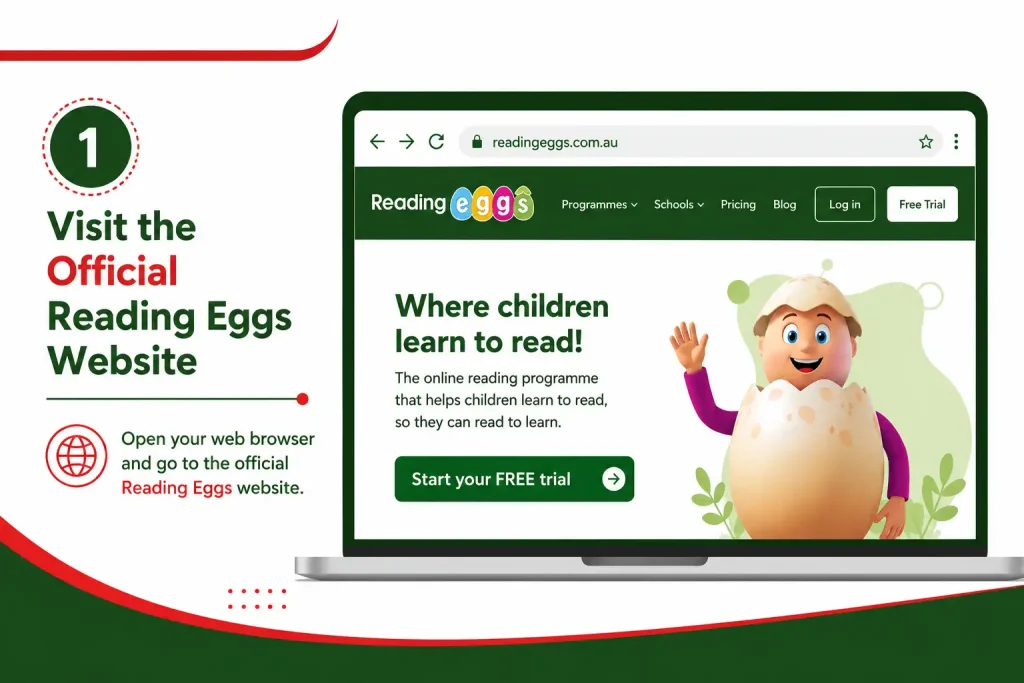
Begin with the official Australian eggs reading website rather than an unfamiliar third-party registration page.
Look for an option such as Free Trial, Sign Up or another account-registration button. Website wording and page layouts may change, so follow the options currently displayed by eggs reading.
The service has offered free trials to new users, but the length and conditions of any trial can change.
Visit Offical Website
2. Provide the Parent Account Information
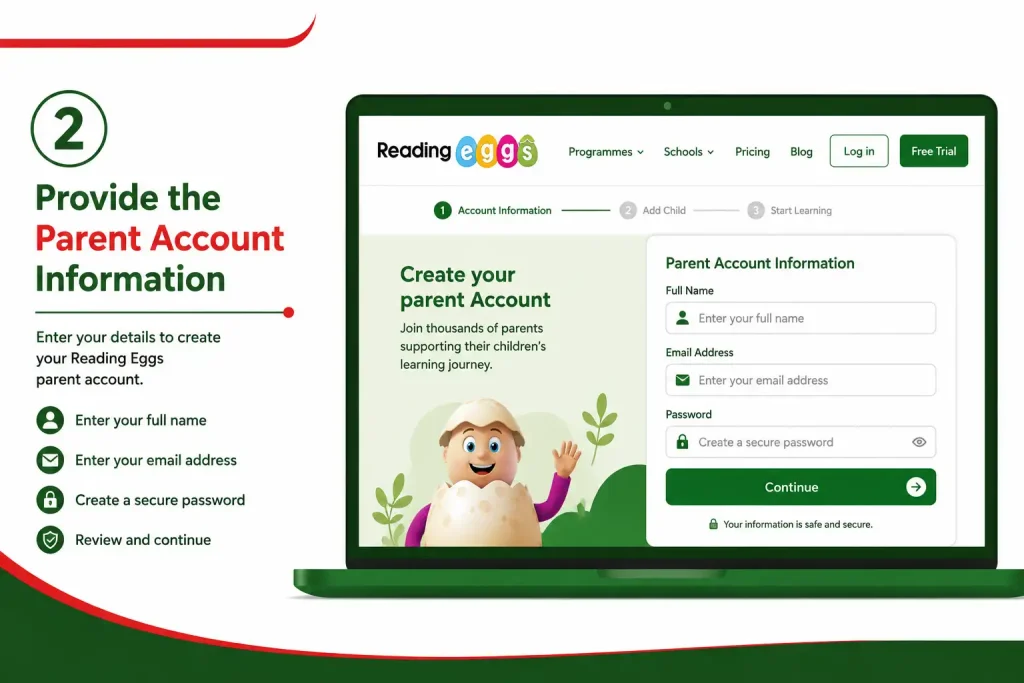
During registration, enter the account details requested by eggs reading, which may include an email address and password.
It’s best to use an email account that the parent or account manager can access. This address may be important for managing the account, recovering login details and receiving subscription-related information.
Choose a secure password and avoid sharing account credentials unnecessarily.
3. Create a Child Profile
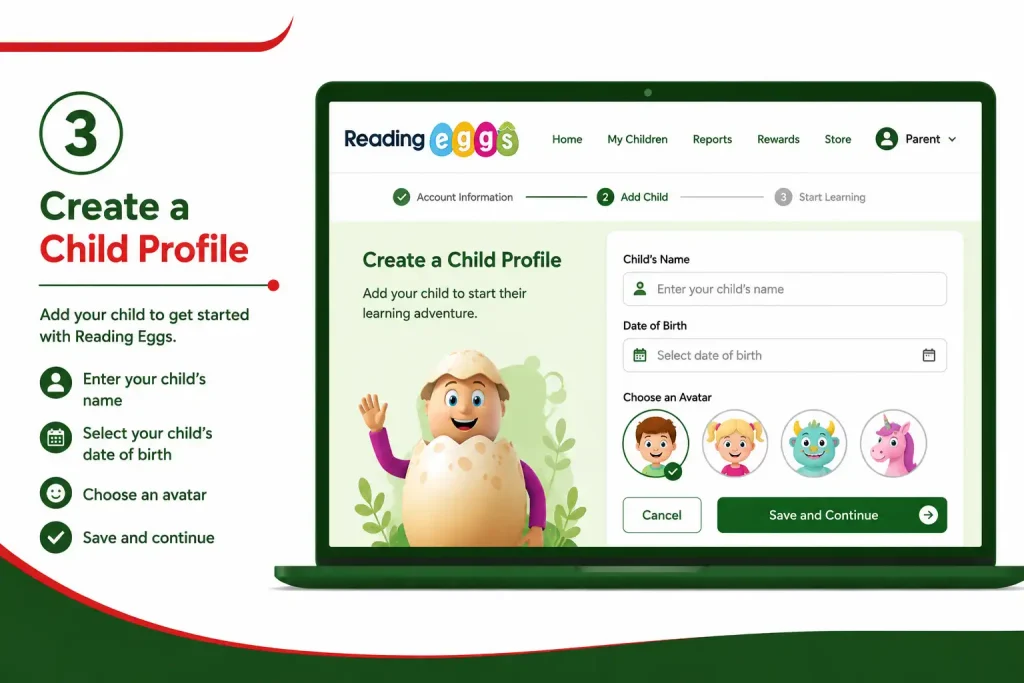
After establishing the parent account, use the family dashboard to add the child who will be using the platform.
Depending on the registration process, you may be asked for information such as:
Families with more than one child can benefit from separate profiles because each learner can have an individual pathway and progress record.
4. Complete the Placement Assessment

eggs reading provides placement testing to help determine an appropriate starting level.
The official service explains that children can complete reading and spelling placement assessments, while other programmes may have their own assessment options. Parents can also adjust a child’s level through the family dashboard where that option is available.
A placement assessment can help avoid putting a child into work that is significantly above or below their current ability.
Parent tip: Allow your child to complete the assessment independently rather than supplying answers. The purpose is to identify a suitable starting point, not to produce the highest possible score.
Reading Eggs Plans and Subscription Choices
eggs reading has offered different arrangements for families and educational users. Pricing, plan names and included programmes can change, so the current official website should always be checked before starting a paid subscription.
| Plan Type | Intended For | Typical Access |
|---|---|---|
| Individual Child | One learner | Reading and related programmes included with the chosen subscription |
| Family Plan | Families with several children | Multiple child profiles under one parent account |
| School/Teacher Plan | Schools and classrooms | Student management, reports and teaching features |
The official eggs reading website also provides options for homeschooling and family learning, including arrangements that can support multiple children where applicable.
Questions to Check Before Subscribing
Before selecting a plan, consider:
Because commercial terms can change, current eggs reading pricing and subscription conditions should take precedence over older information published elsewhere.
Fore More Information:
Visit Homepage
What the Reading Eggs Learning Process Looks Like
The eggs reading experience is designed around active participation rather than simply watching educational content.
A child may move through a sequence such as:
Log in → Choose a programme → Complete activities → Earn rewards → Read books → Complete assessments → Review progress
This progression gives learners a clear pathway through their work while giving parents a way to monitor activity.
According to eggs reading resources, progress reports can provide information about completed lessons, books and quizzes, as well as aspects of reading development and skills that have been learned.
Why the Starting Level Matters
Children don’t develop literacy skills at exactly the same pace.
One child may already understand basic letter sounds, while another learner of the same age may still be building familiarity with the alphabet. Age alone therefore doesn’t necessarily provide enough information to determine the most suitable starting point.
Placement testing can help by using assessment information rather than relying solely on a child’s age.
Parents can then review progress and, where supported by the programme, make adjustments through the family dashboard.
Reading Eggs Student Login Guide
Once the parent account and child profile are ready, the learner can access their personalised learning environment.
Accessing Reading Eggs on the Web
Start with the official eggs reading website:
eggs reading official website
Follow the login route currently displayed on the site.
Select the Login Option
Open the eggs reading website and choose Login.
Choose the Student Login
If the website provides different login options, select the one intended for the student.
Enter the Child’s Credentials
Provide the child’s assigned username or login ID and password.
Check the information carefully, particularly if the credentials were supplied during the original account setup.
Enter the Learning Area
After authentication is successful, the child can select their profile or avatar and access the appropriate programme.
When the platform asks for student credentials, the child should use their assigned login details rather than the parent’s email address.
Using Reading Eggs on Phones and Tablets
eggs reading has supported access through desktop computers as well as mobile and tablet devices, including iOS and Android.
For app-based access, use the official app marketplace associated with the child’s device and check the current compatibility requirements before installation.
What Can Parents See in the Dashboard?
The parent account does more than provide access to lessons. The family dashboard can give parents an overview of how a child is using the platform and how their learning is progressing.
eggs reading resources indicate that parents can view information such as completed activities, lessons, books and quizzes. Progress information may also include an estimated reading age and an overview of developed skills.
These reports can help parents identify patterns in a child’s learning.
For instance, if a learner repeatedly finds one type of activity difficult, the parent may decide that additional practice is worthwhile instead of simply encouraging the child to move ahead.
A Useful Reminder for Parents
Progress reports should be viewed as a source of guidance rather than a complete assessment of a child’s literacy.
They can show what the learner has completed and highlight areas where more practice may be useful, but they shouldn’t replace the broader assessment and professional judgement provided by a teacher or qualified educator.
Why Reading Eggs Can Support a Regular Reading Routine
eggs reading combines guided lessons with interactive activities, giving children several ways to practise literacy skills during the same learning session. Instead of relying on lengthy reading exercises, the platform can mix short tasks with games, rewards and digital books.
For parents, this variety can make it easier to establish a consistent routine. A child might work through a lesson, practise a particular phonics skill and then read a digital book before finishing the session.
Regularity is often more useful than making every session lengthy. For younger learners especially, shorter periods of focused practice may be easier to manage and maintain.
Key Learning Tools Inside Reading Eggs
The exact features available can vary according to the programme and subscription, but eggs reading brings several types of learning activities together.
Guided Lessons
Lessons provide children with a structured route through reading skills rather than requiring them to decide what to study next.
Younger learners may work with letter sounds, phonics and sight words, while more advanced students can encounter activities focused on vocabulary and comprehension.
Phonics Activities
Phonics helps children understand the relationship between letters and sounds and apply that knowledge when reading unfamiliar words.
For children who need additional decoding practice, Fast Phonics offers a more focused pathway built around phonics development.
Digital Reading
Digital books give children an opportunity to use the skills they have practised in lessons.
Reading isn’t only about completing individual exercises. Regular access to books allows learners to apply decoding, vocabulary and comprehension skills in a broader context.
Older children using eggs readingpress can also access an extensive digital reading library alongside comprehension and vocabulary activities.
Games and Rewards
Games and rewards provide visual feedback and a sense of achievement as children progress.
These features can be particularly appealing to younger learners, although rewards work best when they encourage learning rather than becoming the sole reason a child participates. Parents can reinforce this by discussing what their child learned instead of focusing only on points or rewards.
Creating a Useful Reading Eggs Routine at Home
An online literacy programme tends to work best when it becomes part of a wider reading habit rather than replacing other forms of reading.
A balanced weekly routine might include:
The goal is to make reading feel like a normal part of the day. Not every reading activity needs to feel like a lesson or assessment.
A Simple Way to Check Understanding
When your child completes a lesson, ask them to explain one thing they remember.
For example:
“What new sound did you practise today?”
A short conversation like this can reveal whether the child understood the activity rather than simply worked through it.
Managing Reading Eggs for More Than One Child
Families with several children can use separate child profiles so that each learner has an individual progress record and starting level.
This can be especially useful when siblings are at different ages or stages of reading development. One child may still be working on basic phonics while another is ready for more challenging comprehension activities.
Treat each child’s progress separately rather than using one sibling as a comparison point for another. The purpose of the individual profiles is to follow each learner’s own development.
What Parents Can Manage From the Dashboard
The parent dashboard brings important account and learning information together. Depending on the subscription and programme, parents may be able to review:
The supplied eggs reading information also identifies the dashboard as an area for managing child profiles and subscription-related settings.
Reading Eggs vs Reading Eggspress
The names eggs reading and eggs reading can be confusing, particularly for parents who are new to the platform.
The core eggs reading programme is associated mainly with early reading development. It includes areas such as phonics, sight words, phonemic awareness and developing comprehension.
eggs reading by comparison, is intended for more advanced learners and puts greater emphasis on comprehension, vocabulary and wider reading practice.
| Feature | eggs reading | eggs reading |
|---|---|---|
| Main audience | Younger readers | Older readers |
| Phonics | Strong emphasis | Less central |
| Early reading | Yes | Later progression |
| Vocabulary | Included | Strong emphasis |
| Comprehension | Developing | Strong emphasis |
| Digital reading | Yes | Extensive reading library |
Choosing between the programmes should depend on the child’s current reading ability rather than simply selecting the option associated with an older age group.
Managing a Reading Eggs Subscription
Parents should use the official eggs reading account area when managing billing and subscription details.
The supplied information identifies Account Settings → Manage Subscription as the relevant area. Depending on the account, available options may include adding payment details, applying promotional codes or changing family-plan settings.
Prices, promotions and billing conditions can change, so check the current information provided by eggs reading before making a payment.
Check These Details Before Paying
Before choosing a subscription, review:
Avoid relying on outdated prices or offers published on third-party websites.
Common Reading Eggs Login Issues
Most login difficulties can be traced to incorrect credentials, selecting the wrong account type or problems with the browser or device.
Username or Password Not Accepted
Check the username and password carefully before trying again.
Passwords are generally case-sensitive, so make sure Caps Lock isn’t causing an unexpected entry. If the password has been forgotten, use the Forgot Password? option available on the relevant login screen.
Parent Account Login Failure
Parent and student accounts can use different login details.
The parent account may require the email address used during registration, while a child may need to enter an assigned username or Login ID. Confirm that you’re using the correct login route before attempting to reset credentials.
Student Login Details Don’t Work
Check the child’s assigned username or Login ID and password against the information provided when the account was created.
Don’t keep guessing different passwords. If the correct details still aren’t accepted, use the available recovery or support options.
Solving Reading Eggs Audio and Video Problems
Some eggs reading activities rely on sound and other media features. If an activity loads without audio or video, begin by checking the basic device and browser settings.
Start With the Device
Confirm that:
The supplied eggs reading troubleshooting information specifically highlights device volume and browser permissions as areas worth checking.
Try Another Browser
If a lesson continues to behave unexpectedly, test it in another current mainstream browser, such as:
If the problem occurs only in one browser, cached information or browser settings may be responsible.
Clear Cached Data
Old cached files can occasionally interfere with web applications.
Try clearing the browser’s cache and cookies, close the browser completely, reopen it and sign back into eggs reading.
When Reading Eggs Progress Doesn’t Save
It can be frustrating when completed work doesn’t appear in a child’s progress record.
Start by checking the internet connection. A temporary connectivity issue can prevent completed information from reaching the service.
The supplied eggs reading guidance also recommends allowing the current lesson activity to finish properly and using the Home/Exit function so that progress has an opportunity to be sent to the server.
Before Closing a Lesson
Use this routine after finishing an activity:
This can reduce the likelihood of ending a session before the completed work has been recorded.
What to Do When the Reading Eggs App Freezes
If the app becomes frozen or stops responding, start with the simplest solution.
First Try
Force-close the app and then launch it again.
If the problem continues, check whether the device’s operating system meets the current requirements for the eggs reading app.
If the Problem Continues
Reinstalling the application may help when ordinary troubleshooting doesn’t resolve the issue.
Before removing the app, make sure you know the account details needed to sign in again. If the problem remains after reinstalling, use the official eggs reading support channel rather than relying on unofficial troubleshooting sites.
Getting Better Results From Reading Eggs
Digital learning is most useful when it complements real-world reading rather than replacing it.
Parents can connect online lessons with everyday literacy practice. For example, after completing a phonics activity, look for words in a physical book that contain the same sound. This gives the child a chance to transfer the skill from the digital activity to actual reading.
Five Habits Worth Building
1. Keep sessions manageable
Younger children may learn more comfortably when sessions are short enough to maintain concentration.
2. Read together
Shared reading remains useful even after a child starts reading independently. It creates opportunities to discuss vocabulary, characters and meaning.
3. Talk about the story
Ask what happened, what the child thinks about the characters and why events happened in a particular way.
4. Give extra attention to difficult skills
If a child repeatedly struggles with one activity, provide additional practice instead of simply moving to the next level.
5. Praise progress and effort
Recognise persistence and improvement rather than making scores the main measure of success.
Reading Eggs Should Be Part of a Wider Literacy Routine
eggs reading can provide useful supplementary practice, but it works best as one component of a broader approach to literacy.
A balanced routine may include:
Every child responds differently to learning activities. If a particular exercise becomes frustrating, parents can adjust the routine and combine eggs reading with other forms of reading practice.
Reading Eggs Parent Checklist
Before a child begins using the platform, make sure:
Once these basics are ready, the child can begin using the relevant eggs reading programme.
A Weekly Reading Eggs Plan You Can Adapt
There isn’t one schedule that every family needs to follow. The following example simply shows how online practice can be combined with other literacy activities.
| Day | Suggested Activity |
|---|---|
| Monday | eggs reading lesson followed by a short book |
| Tuesday | Phonics practice and shared reading |
| Wednesday | eggs reading lesson and vocabulary discussion |
| Thursday | Digital book and comprehension questions |
| Friday | Review a difficult skill and allow independent reading |
| Weekend | Optional reading or family story time |
This is a sample routine, not a compulsory eggs reading timetable. The most useful element is consistency and choosing activities that suit the child’s age, school workload and learning needs.
Using Reading Eggs for Homeschool Learning
eggs reading can be useful within a homeschooling routine because it gives families structured online literacy activities without requiring parents to create every exercise themselves.
However, a digital programme should sit alongside other forms of learning. The supplied material identifies activities such as physical books, handwriting, spelling, creative writing, storytelling, library visits, educational games and everyday reading as useful companions.
A balanced homeschool literacy routine might therefore combine:
The aim is to give children opportunities to use literacy skills in different situations rather than making screen-based learning their only source of practice.
When a Reading Eggs Lesson Feels Too Difficult
Not every activity will be equally comfortable for every learner. A child may struggle with a new phonics pattern, an unfamiliar word or a comprehension question.
Rather than immediately moving to a more advanced level, identify the exact skill causing the difficulty.
Ask a simple question:
Which part of this activity is proving difficult?
If a particular sound is causing trouble, practise that sound separately. If the child can read the words but struggles to answer comprehension questions, discuss the story first and then return to the activity.
The aim should be gradual skill development, not simply completing as many lessons as possible.
Reading Eggs Login Problems: What to Check First
Can’t get into your account? Work through the basics before trying more complicated solutions.
1. Make Sure You’re Using the Right Login
Parent and student accounts may use different credentials. Confirm that you’re entering the correct login information for the account you actually want to access.
2. Check Every Character
Look for common mistakes such as:
These small errors can prevent an otherwise valid login from working.
3. Recover a Forgotten Password
If you can’t remember the password, use the password-recovery option provided on the official eggs reading login page rather than trying repeated guesses.
4. Update or Change the Browser
Try accessing the service through a current version of a supported browser such as Chrome, Safari or Microsoft Edge.
5. Clear Browser Data
If the login page behaves strangely, clearing the browser’s cache and cookies can sometimes resolve stored-data problems.
6. Test the Internet
A weak or unstable connection can interfere with both account access and lesson loading. Check whether other websites are working normally before assuming the eggs reading service is the cause.
Reading Eggs Lessons Won’t Load
A lesson that stays blank or continues loading can have several causes.
Start by refreshing the page. If nothing changes, close the browser and open it again.
Next, visit another website. If other websites are also failing, your internet connection may be responsible. If other websites work normally but eggs reading doesn’t, try another supported browser and clear its cached data.
For app users, completely close and reopen the application. If the issue remains, check whether an application or operating-system update is available.
Reading Eggs Audio Not Working? Try These Checks
Sound is important for many early-learning activities, so check the device before assuming that the lesson itself is broken.
Quick Audio Checklist
If the same problem continues across different browsers or devices, the next step is to contact official eggs reading support.
Where to Get Reading Eggs Support
When normal troubleshooting doesn’t solve an account or technical problem, use the official eggs reading support resources. Avoid unofficial websites offering login assistance or account recovery.
The supplied source identifies the Australian eggs reading website as the official destination:
eggs reading Australia
When contacting support, have useful information available, such as the account email address and the device or browser experiencing the problem. Never publish or give your password to an unofficial support provider.
Reading Eggs Parent Preparation Checklist
Before your child starts a lesson, take a minute to check the essentials:
Doing these checks beforehand can prevent avoidable interruptions once the child begins learning.
What Makes Reading Eggs Useful?
Based on the supplied information, eggs reading brings several learning and parent-management features together.
Structured Lessons
Children can follow organised learning pathways rather than choosing unrelated activities at random.
Different Learning Pathways
The wider eggs reading ecosystem includes programmes aimed at different stages, from younger children through to older learners.
Interactive Activities
Games and interactive exercises give children another way to practise literacy skills.
Digital Books
Digital books form part of the learning experience, giving children opportunities to apply reading skills.
Parent Progress Tools
Parent accounts provide tools for managing child profiles and reviewing available learning information.
Maths Support
Relevant subscriptions may also provide access to Mathseeds, which focuses on foundational maths learning.
Important Things Parents Should Keep in Mind
eggs reading can be a useful source of literacy practice, but it shouldn’t be treated as a complete replacement for every other learning experience.
Children develop at different rates, and their needs can change as they progress. Parents can use the available progress information as one source of guidance while also considering feedback from teachers or other qualified educators when appropriate.
Programme descriptions, subscription terms, supported devices and pricing can change. For that reason, check the current official eggs reading website before making decisions about registration or subscriptions.
FAQs
Final Thoughts
eggs reading can make structured literacy practice easier to organise by combining lessons, interactive activities, digital books, assessments and parent tools. Its wider programme options also provide pathways covering phonics, comprehension and foundational maths.
The most useful approach is to treat online learning as one part of a child’s wider reading life. Physical books, conversations about stories, vocabulary practice and everyday reading all give children opportunities to use what they learn on screen.
For the latest registration, login, subscription and programme information, use the official eggs reading website.
Read More:
Australian Passport Renewal 2026: Complete Online Guide
ATO Tax Agent Portal 2026: Complete Login & Online Services Guide
Student Portal 2026 Unlocked: Login, Features & Student Services
Australian Passport 2026: Complete Application, Renewal & Fees Guide
ATO Portal 2026: Complete Login, Access & Online Services Guide
Storypark Login 2026: Complete Guide to Secure Account Access